Where it came from
Japan and the Korean peninsula.
How it got here
Probably arrived in the early 1900s in soil with imported plants, and spread for a century through the nursery trade, in mulch and compost, and as fishing bait. They were largely ignored until the 2010s, when gardeners across the Northeast started noticing soil turning to loose granules.
What it does to the ecosystem
They live in the top few inches of soil and devour the leaf litter layer in a single season, converting it to loose, dry castings like coffee grounds. That layer is where native seedlings germinate, where ground-nesting bees and salamanders live, and where most of the forest's nutrients cycle. Forests lose their understory; gardens lose their soil structure.
What it costs
No effective control exists once they are established. The main cost is permanent loss of forest floor habitat and the spread through every plant sale and load of mulch.
Don’t confuse it with
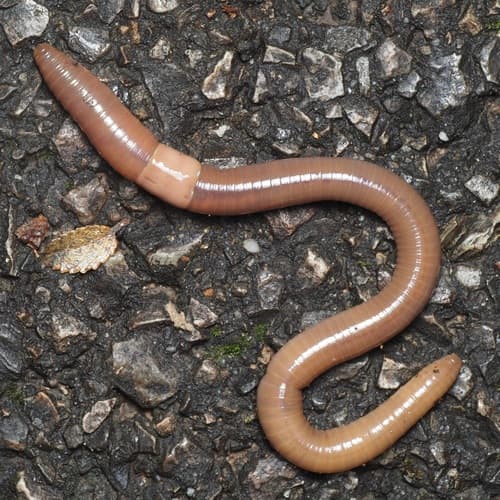
- European earthworms (nightcrawlers). Nightcrawlers are sluggish and their saddle (clitellum) is raised, pinkish, and does not fully circle the body. Jumping worms thrash wildly, and the clitellum is flat, milky white, and goes all the way around close to the head.
How to identify it
Thrash violently like a snake when handled; smooth, milky-white clitellum (band) that fully encircles the body, flush with the skin, near the head.
What to do
Do not share plants or soil from infested beds, buy bare-root or heat-treated compost, and clean tools and boots. There is no practical control once established.
On Long Island
Confirmed in gardens and parks across both counties. Buy bare-root plants when you can, share divisions with the soil washed off, and never move soil from an infested bed.
Worth knowing
- There are no native earthworms in most of New York; the glaciers scraped them away, so every worm you see is introduced.
- Adults die at first frost; the species survives winter only as cocoons, which is why they are so hard to spot in spring.
- Heating compost or mulch to 104°F for three days kills the cocoons.