Looking up observations…
Zip code tool
Invasive Species Near You
Which invasive plants and pests have people documented around you, and what do they look like this month? Enter a zip code. We check 40 species against research-grade iNaturalist observations, highlight the current life stage of each one with photos, and tell you what to do about it.
What to look for in Sep
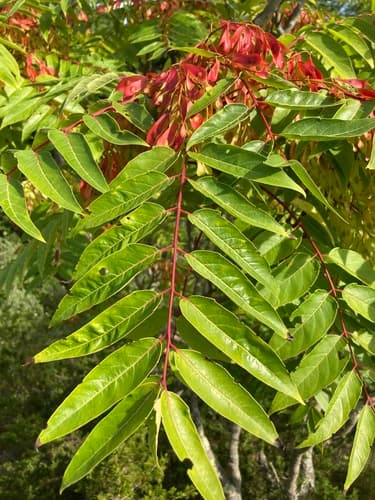 no rights reservedTree-of-heaven · Seed clustersBig drooping clusters of twisted, papery, tan-to-red samaras on female trees, persisting into winter.Story, harm, and what to do →
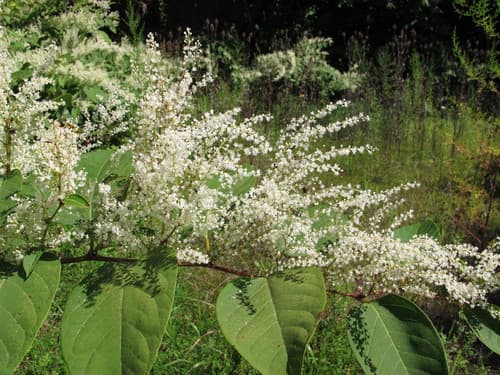 (c) Link Davis, some rights reserved (CC BY-NC)Japanese knotweed · FloweringSprays of tiny creamy-white flowers, buzzing with bees.Story, harm, and what to do →
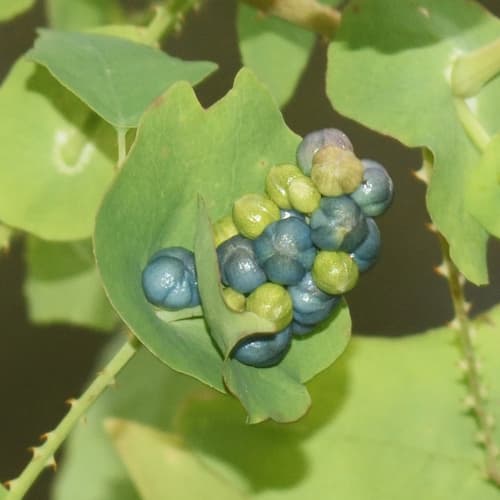 (c) Fyodor Pudovikov, some rights reserved (CC BY)Mile-a-minute weed · Blue berriesClusters of metallic blue berries sitting in the leafy cups.Story, harm, and what to do →
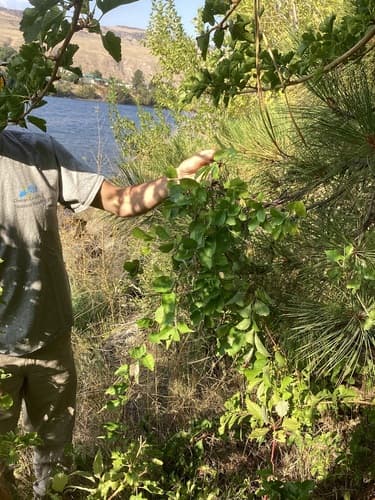 (c) jenna_medlar, some rights reserved (CC BY-NC)Oriental bittersweet · Orange berriesYellow-orange capsules along the stems splitting to show red seeds, unmistakable after leaf drop.Story, harm, and what to do →
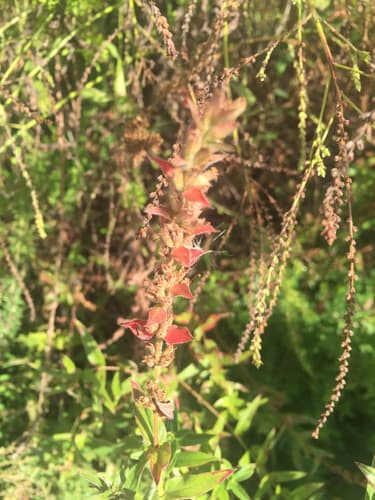 (c) sureetb, some rights reserved (CC BY-NC)Purple loosestrife · Seed spikesBrown spikes shedding dust-fine seed, up to two million per plant.Story, harm, and what to do →
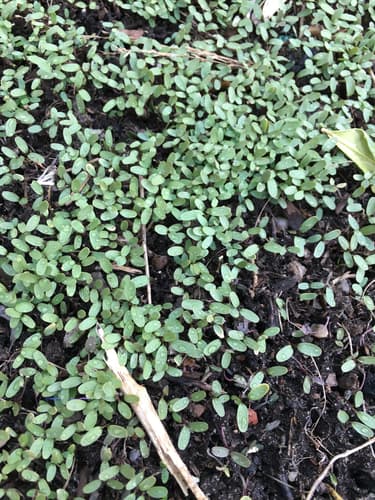 (c) Sequoia Janirella Wrens, some rights reserved (CC BY-NC)Garlic mustard · RosettesLow rosettes of kidney-shaped, scalloped leaves that smell of garlic when crushed. They stay green all winter, which makes them easy to spot.Story, harm, and what to do →
Stages are typical for the Northeast. Enter a zip code to rank by what has actually been reported near you and to adjust for the warmth of the current season.
What this tool checks
We maintain a list of 37 invasive species that matter most in the Northeast, drawn from the New York State prohibited and regulated species list, the Suffolk County Do Not Sell list, and the pests under active management on Long Island. For each, we query iNaturalist for research-grade observations within your chosen radius over the last three years and rank what turns up.
For the 17 species that change appearance through the year, we show a month-by-month timeline, highlight the current stage, adjust it for the accumulated warmth of the current year, and pull recent photos of that stage from near you.
Species on the watch list
- Tree-of-heaven
- Japanese knotweed
- Mile-a-minute weed
- Oriental bittersweet
- Japanese barberry
- Burning bush (winged euonymus)
- Purple loosestrife
- Common reed (non-native Phragmites)
- Garlic mustard
- Porcelain berry
- Kudzu
- Japanese stiltgrass
- Multiflora rose
- Norway maple
- Callery (Bradford) pear
- Autumn olive
- Black swallow-wort
- Pale swallow-wort
- Japanese honeysuckle
- Bush honeysuckles (Amur, Morrow's, Tatarian)
- Common and glossy buckthorn
- English ivy
- Chinese and Japanese wisteria
- Mugwort
- Chinese silver grass (Miscanthus)
- Lesser celandine
- Yellow flag iris
- Amur corktree
- Tropical milkweed
- Butterfly bush
- Spotted lanternfly
- Emerald ash borer
- Asian longhorned beetle
- Hemlock woolly adelgid
- Spongy moth (formerly gypsy moth)
- Jumping worms
- Brown marmorated stink bug
FAQ
About invasive species and this tool
- What counts as an invasive species?
- A non-native plant, animal, or pathogen that spreads on its own and causes harm to ecosystems, the economy, or human health. New York regulates the worst offenders under 6 NYCRR Part 575: prohibited species cannot be sold, transported, or planted; regulated species can be sold with a warning but not released into the wild.
- Why does what I should look for change by month?
- Many invasive insects and plants look completely different through the year. Spotted lanternfly is a gray egg mass from October to April, a black-and-white nymph in May and June, a red nymph in July, and a gray winged adult from August on. Garlic mustard is a low rosette all winter and a flowering stalk only in April and May. The tool highlights the current stage, adjusted for whether the season is running warm or cool, and shows photos of that stage.
- What is the season offset?
- Insects develop on accumulated heat, measured in growing degree days above 50°F. We total this year's degree days for your location from January 1 and compare them with the ten-year average for the same date. If this year is ahead, expect each life stage a bit earlier than the calendar suggests.
- Why does the tool show some species with a zero count?
- Zero means no research-grade iNaturalist observation of that species within the radius and time window, not that it is absent. Many invasives are so common that people stop reporting them, and private land is rarely surveyed. Treat the list as a starting point.
- How do I report an invasive species in New York?
- Use NY iMapInvasives (nyimapinvasives.org) or the iMapInvasives app. Early reports of species that are still spreading, such as mile-a-minute, kudzu, lesser celandine, and spotted lanternfly outside its known range, get the fastest response.