Learn
Invasive species library
Every one of these has a story, and most of them start with someone planting it on purpose. Where it came from, what it does here, how to tell it from its native lookalike, and what to grow instead.
Insects and other pests
Most arrived in shipping crates and packing material within living memory.
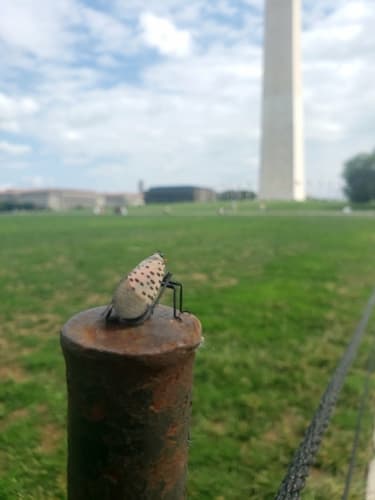 (c) Sabrina, some rights reserved (CC BY-NC)Invasive pestSpotted lanternflyLycorma delicatulaEgg masses on a shipment of landscaping stone from China hatched in Berks County, Pennsylvania, in 2014. From there it hitchhiked on vehicles, rail cars, and nursery stock. It was confirmed on Long Island in 2020 and is now established in both counties.Now (Sep): Adults
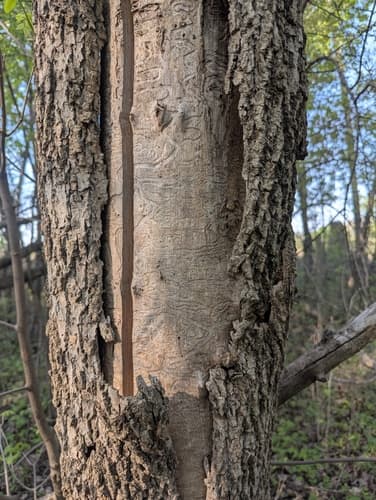 (c) Loïc Mathieu, some rights reserved (CC BY)Invasive pestEmerald ash borerAgrilus planipennisArrived in wood packing material in shipping crates and was discovered killing ash trees near Detroit in 2002, though it had probably been there since the early 1990s. It was found in New York in 2009 and on Long Island in 2018, spreading largely in firewood.Now (Sep): Larvae under bark
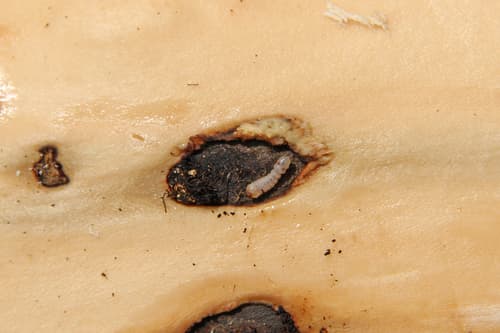 (c) Joe Boggs, some rights reserved (CC BY-NC)Invasive pestAsian longhorned beetleAnoplophora glabripennisArrived in solid wood packing material from China. First discovered in Brooklyn in 1996 boring into Norway maples, then found in Amityville and Massapequa on Long Island in 1999, and later in New Jersey, Massachusetts, Ohio, and South Carolina.Now (Sep): Larvae inside trunks
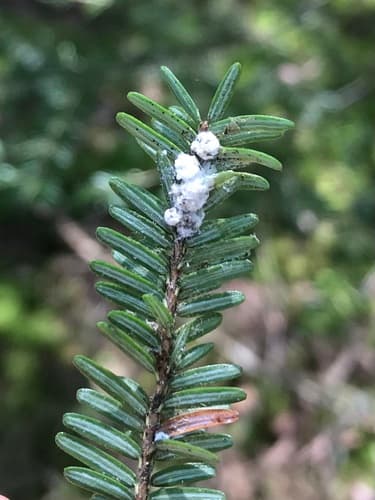 (c) Cody Chapman, some rights reserved (CC BY-NC)Invasive pestHemlock woolly adelgidAdelges tsugaeFirst found in Virginia in 1951, probably on imported Japanese hemlock nursery stock. It spread slowly at first, then rapidly through the Appalachians and the Northeast from the 1980s on. It reached Long Island in the late 1980s and has been killing our hemlocks ever since.Now (Sep): Hard to see
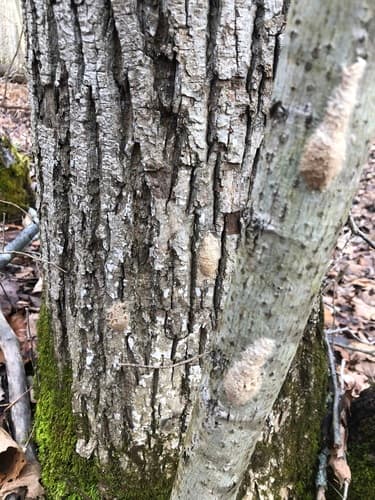 (c) alexwalkerr, some rights reserved (CC BY-NC)Invasive pestSpongy moth (formerly gypsy moth)Lymantria disparIn 1869 an amateur entomologist named Étienne Léopold Trouvelot brought egg masses to his home in Medford, Massachusetts, hoping to breed a hardier silk moth. Some escaped from a window. Within 20 years they were defoliating the town, and they have been spreading west and south ever since.Now (Sep): Egg masses
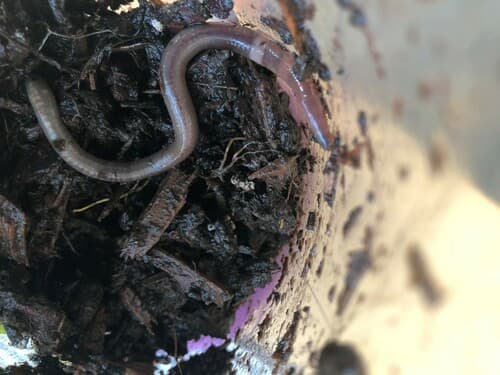 (c) dheleba, some rights reserved (CC BY-NC)Invasive pestJumping wormsAmynthas spp.Probably arrived in the early 1900s in soil with imported plants, and spread for a century through the nursery trade, in mulch and compost, and as fishing bait. They were largely ignored until the 2010s, when gardeners across the Northeast started noticing soil turning to loose granules.Now (Sep): Adults
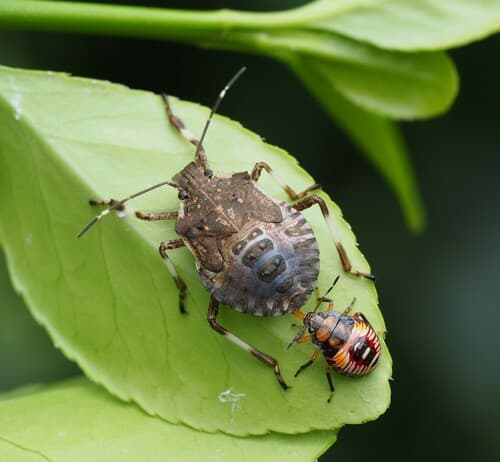 (c) Denise Williams, some rights reserved (CC BY-NC)Invasive pestBrown marmorated stink bugHalyomorpha halysFirst collected in Allentown, Pennsylvania, in 1998, having arrived in shipping containers a few years earlier. It spread through the Mid-Atlantic in the 2000s and caused catastrophic orchard damage in 2010.Now (Sep): Nymphs
Plants
Nearly all were planted on purpose, as ornamentals, erosion control, or wildlife food, before anyone understood the cost.
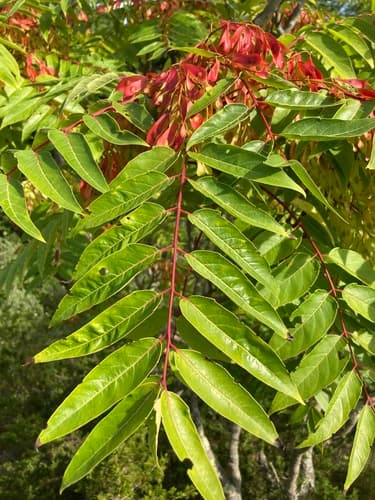 no rights reservedNY ProhibitedTree-of-heavenAilanthus altissimaBrought to Philadelphia in 1784 by a gardener named William Hamilton as a fashionable, fast-growing shade tree, and again to California by Chinese immigrants during the Gold Rush. Nurseries sold it widely through the 1800s because it tolerated coal smoke and poor city soil, which is exactly why it now grows in every railroad cut and vacant lot in the Northeast.Now (Sep): Seed clusters
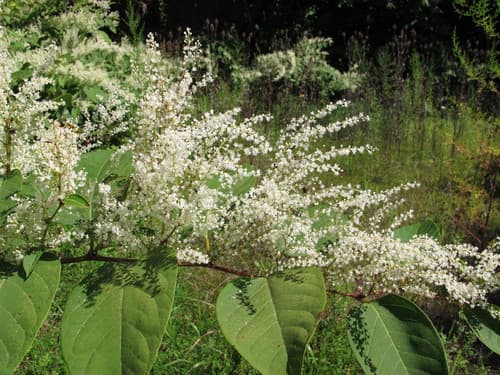 (c) Link Davis, some rights reserved (CC BY-NC)NY ProhibitedJapanese knotweedReynoutria japonicaPhilipp von Siebold, a German physician, shipped it from Japan to his nursery in the Netherlands in the 1840s, and it won a gold medal as the most interesting new ornamental of 1847. It reached American gardens by the 1870s and was also planted to stabilize stream banks and screen railroad tracks.Now (Sep): Flowering
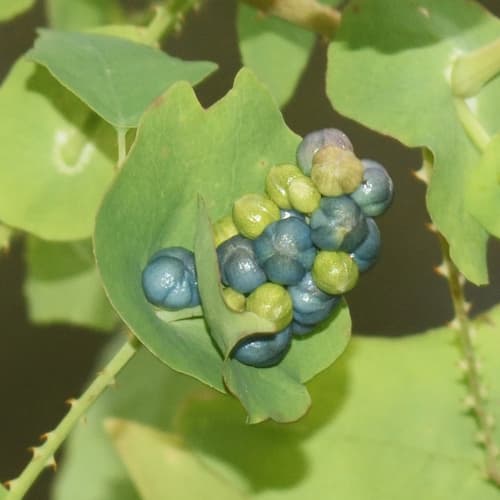 (c) Fyodor Pudovikov, some rights reserved (CC BY)NY ProhibitedMile-a-minute weedPersicaria perfoliataA contaminated shipment of holly seed from Japan brought it to a nursery in York County, Pennsylvania, around 1930. The nursery owner found the odd triangular vine interesting and let it grow. Everything in the eastern United States descends from that patch.Now (Sep): Blue berries
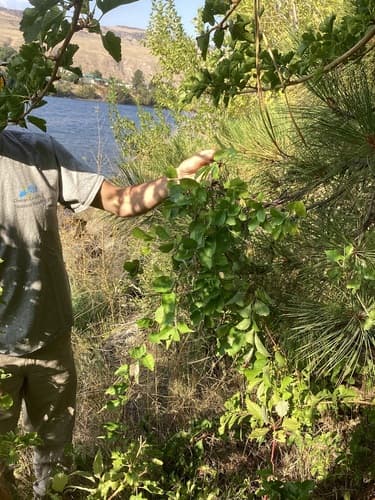 (c) jenna_medlar, some rights reserved (CC BY-NC)NY ProhibitedOriental bittersweetCelastrus orbiculatusImported to the United States around 1860 as an ornamental vine prized for its orange-and-red fruit in autumn arrangements. It was sold by nurseries for a century, and the wreaths and swags made from it spread seed into every neighborhood.Now (Sep): Orange berries
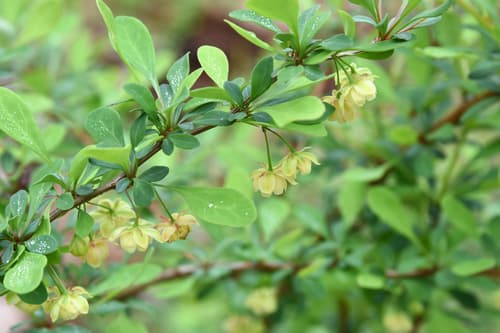 (c) Mark Kluge, some rights reserved (CC BY-NC), uploaded by Mark KlugeNY ProhibitedJapanese barberryBerberis thunbergiiSeeds arrived at Boston's Arnold Arboretum in 1875, and the plant was promoted as a replacement for common barberry, which was being eradicated because it hosts wheat stem rust. Its thorns, deer resistance, and tolerance of shade made it a landscaping staple for a century.
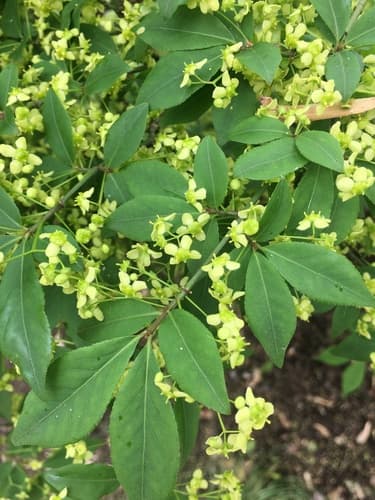 (c) cathytaylormt, some rights reserved (CC BY-NC)NY RegulatedBurning bush (winged euonymus)Euonymus alatusIntroduced to the United States around 1860 for its brilliant scarlet fall color and corky winged stems. It became one of the most-planted shrubs in America, lining parking lots and foundations from coast to coast.
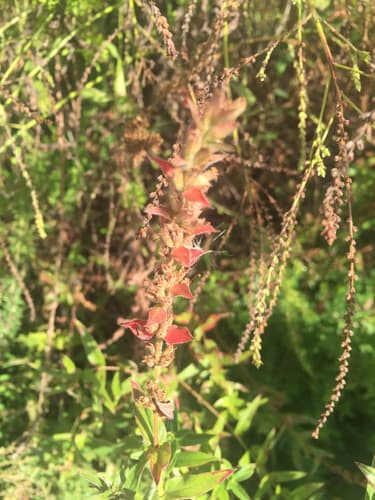 (c) sureetb, some rights reserved (CC BY-NC)NY ProhibitedPurple loosestrifeLythrum salicariaArrived in the early 1800s in ship ballast, which was dumped along the Northeast coast, and in wool and livestock bedding. Gardeners then planted it deliberately for its spikes of magenta flowers, and beekeepers spread it as a nectar plant.Now (Sep): Seed spikes
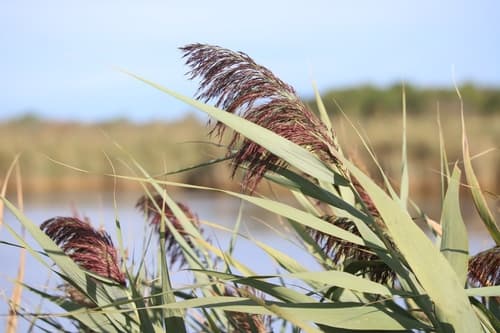 (c) Luca Boscain, some rights reserved (CC BY-NC), uploaded by Luca BoscainNY ProhibitedCommon reed (non-native Phragmites)Phragmites australis subsp. australisThe European genotype probably arrived in ship ballast along the Atlantic coast in the early 1800s. It spread slowly at first, then explosively in the 20th century along new roads, railroads, and ditches, and now dominates coastal marshes from Maine to Virginia.
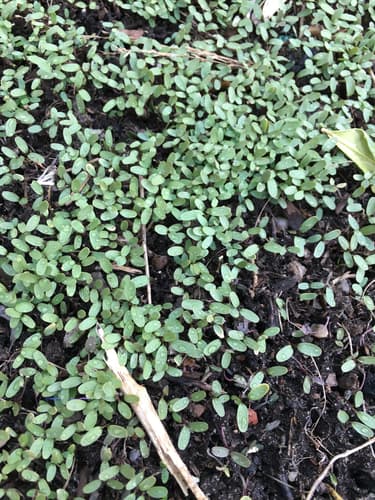 (c) Sequoia Janirella Wrens, some rights reserved (CC BY-NC)NY ProhibitedGarlic mustardAlliaria petiolataFirst recorded on Long Island in 1868, brought by European settlers as a garlic-flavored potherb and a folk remedy for ulcers and gangrene. It escaped kitchen gardens and now covers forest floors from Georgia to Ontario.Now (Sep): Rosettes
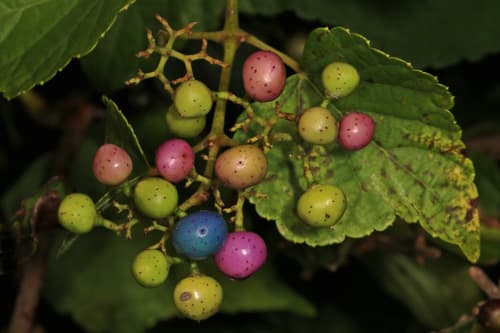 (c) Judy Gallagher, some rights reserved (CC BY-SA), uploaded by Judy GallagherNY ProhibitedPorcelain berryAmpelopsis glandulosaIntroduced around 1870 as an ornamental vine for its speckled turquoise, lilac, and pink berries, which really are beautiful. Nurseries sold it into the 1990s, and it is still found in some old estate gardens on the North Shore.
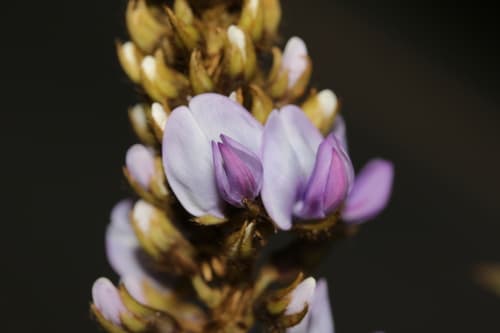 (c) 方伊琳(阿鈣), some rights reserved (CC BY-NC), uploaded by 方伊琳(阿鈣)NY ProhibitedKudzuPueraria montana var. lobataDisplayed at the 1876 Philadelphia Centennial Exposition as an ornamental, then promoted from the 1930s by the Soil Conservation Service, which paid farmers to plant it for erosion control and forage. Around 85 million seedlings were distributed before the government reversed course in the 1950s.
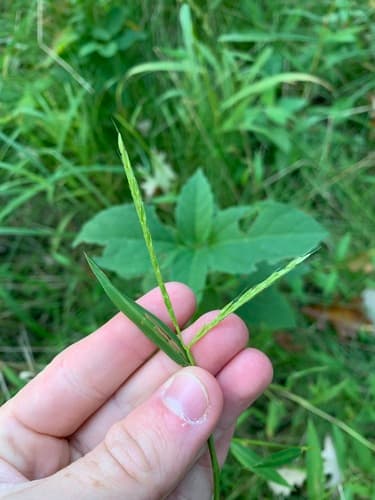 (c) Baxter Naday, some rights reserved (CC BY-NC)NY ProhibitedJapanese stiltgrassMicrostegium vimineumFirst found in Tennessee in 1919. It was used as packing material for porcelain shipped from China, and dried stiltgrass spilled from crates took root wherever the china was unpacked.Now (Sep): Seed heads
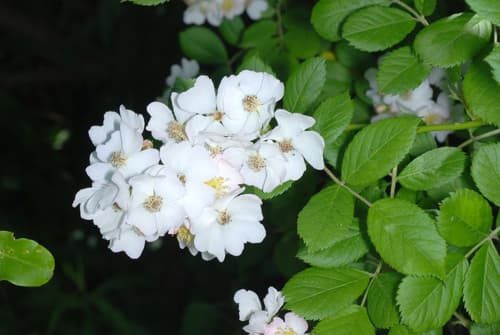 (c) Douglas Goldman, some rights reserved (CC BY-SA), uploaded by Douglas GoldmanNY ProhibitedMultiflora roseRosa multifloraImported in 1866 as rootstock for grafted garden roses. From the 1930s to the 1960s the Soil Conservation Service and state wildlife agencies distributed millions of cuttings, urging farmers to plant it as a living fence and wildlife cover. Highway departments planted it in medians as a crash barrier.
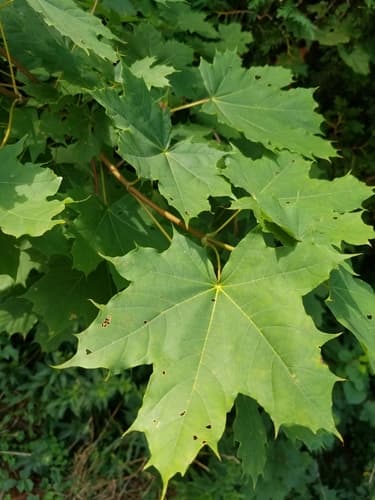 (c) tauntonguy02780, some rights reserved (CC BY-NC), uploaded by tauntonguy02780NY RegulatedNorway mapleAcer platanoidesJohn Bartram of Philadelphia sold the first Norway maples in America in 1756. After Dutch elm disease killed the elms that lined American streets in the 1930s through 1960s, cities planted Norway maples by the millions as a tough, fast-growing replacement.
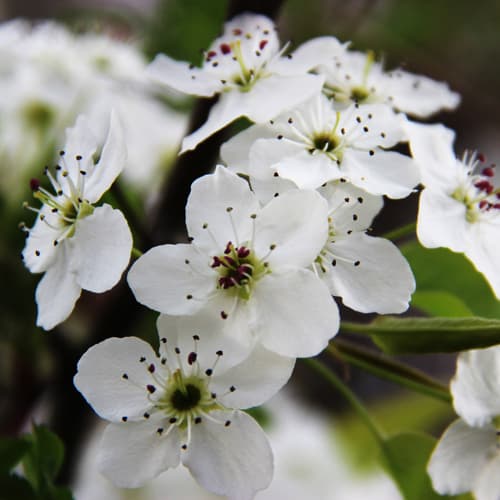 (c) Benjamin Smith, some rights reserved (CC BY)Watch listCallery (Bradford) pearPyrus calleryanaCollected in China in the early 1900s by USDA plant explorer Frank Meyer as fire-blight-resistant rootstock for orchard pears. In the 1950s a USDA breeder selected a thornless, sterile seedling, named it 'Bradford', and released it in 1960. It became the most-planted street tree in America.
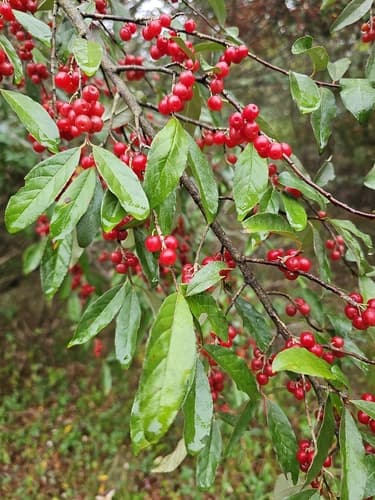 no rights reserved, uploaded by ShawnNY ProhibitedAutumn oliveElaeagnus umbellataIntroduced in 1830 as an ornamental, then planted by the millions from the 1940s to the 1970s by soil conservation agencies for erosion control, mine reclamation, windbreaks, and wildlife food. It was recommended in New York until the 1980s.
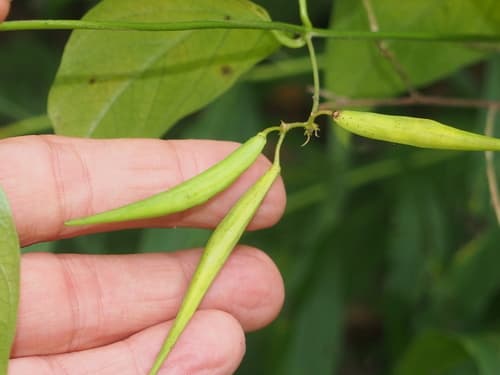 (c) Ken Potter, some rights reserved (CC BY-NC)NY ProhibitedBlack swallow-wortVincetoxicum nigrumFirst collected in Massachusetts in 1854, probably escaped from a botanical garden in Cambridge. It spread quietly along the Northeast coast for a century before anyone noticed it was a problem.Now (Sep): Seed pods
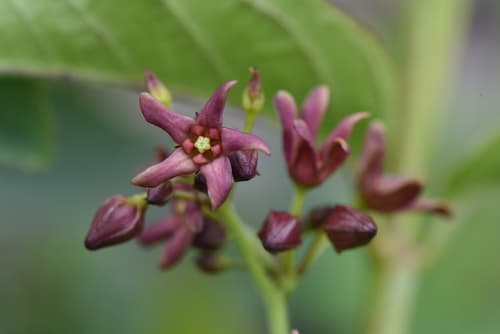 (c) Tyler Smith, some rights reserved (CC BY-NC)NY ProhibitedPale swallow-wortVincetoxicum rossicumIntroduced to North America in the late 1800s, probably through botanical gardens, and first collected in New York around 1897. It spread from the Great Lakes region eastward.
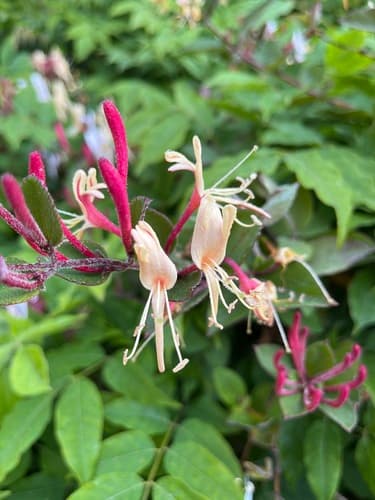 (c) Michael Stanton, some rights reserved (CC BY-NC), uploaded by Michael StantonNY ProhibitedJapanese honeysuckleLonicera japonicaIntroduced to Long Island in 1806 as an ornamental vine, and later planted across the country for erosion control and as deer forage. Its sweet-scented flowers made it a garden favorite for 150 years.
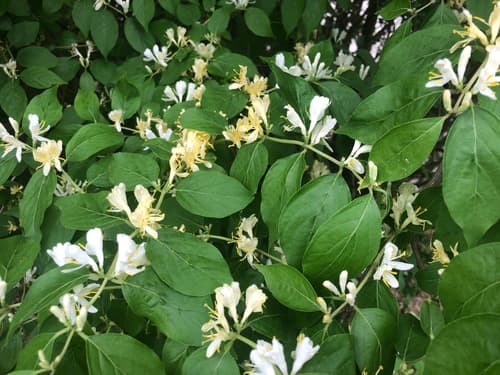 (c) Andrew Conboy, some rights reserved (CC BY), uploaded by Andrew ConboyNY ProhibitedBush honeysuckles (Amur, Morrow's, Tatarian)Lonicera maackii and relativesTatarian honeysuckle arrived in 1752 as an ornamental. Amur and Morrow's came in the late 1800s through botanical gardens, and the USDA promoted bush honeysuckles from the 1960s to the 1980s for wildlife food and erosion control.
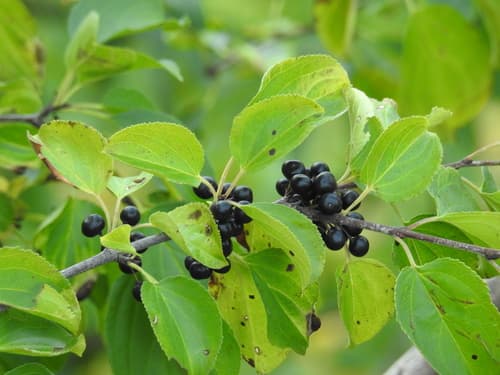 (c) Robert Flogaus-Faust, some rights reserved (CC BY)NY ProhibitedCommon and glossy buckthornRhamnus cathartica / Frangula alnusCommon buckthorn was brought over as a hedge plant in the early 1800s and sold for shelterbelts and living fences into the 1930s. Glossy buckthorn was planted for wildlife and windbreaks.
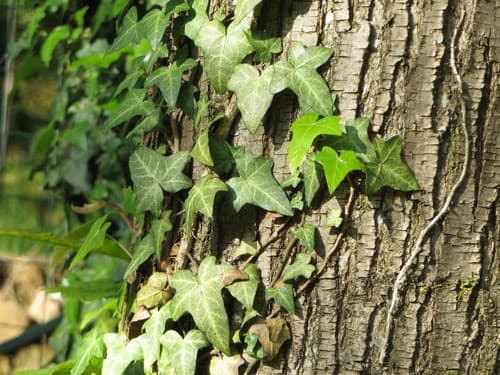 (c) Marianna Boi, some rights reserved (CC BY), uploaded by Marianna BoiWatch listEnglish ivyHedera helixBrought by European colonists in the early 1700s as a ground cover and wall covering, evoking the ivy-covered halls of home. It has been sold continuously ever since and is still one of the most common landscape plants on Long Island.
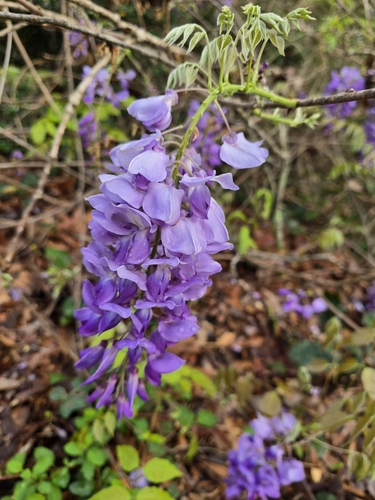 (c) Collin Willson, some rights reserved (CC BY-NC), uploaded by Collin WillsonNY RegulatedChinese and Japanese wisteriaWisteria sinensis / W. floribundaChinese wisteria arrived in 1816 and Japanese wisteria in 1830, both as ornamental vines for arbors and porches. Old estates on Long Island's Gold Coast planted them lavishly, and they are still sold.
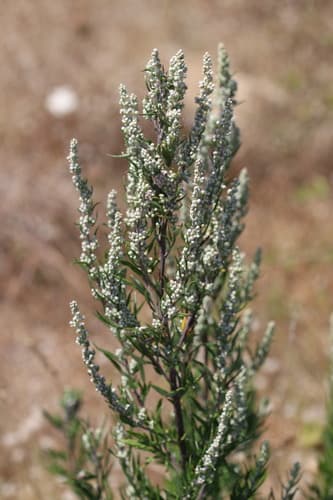 (c) Valentin Hamon, some rights reserved (CC BY-NC), uploaded by Valentin HamonWatch listMugwortArtemisia vulgarisBrought by early European colonists as a medicinal and culinary herb, and repeatedly reintroduced in ship ballast and in nursery stock. It was well established in the Northeast by the 1800s.
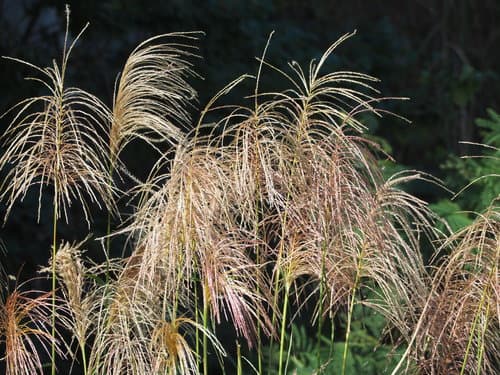 no rights reserved, uploaded by 葉子NY RegulatedChinese silver grass (Miscanthus)Miscanthus sinensisIntroduced in the late 1800s as an ornamental grass and now sold in dozens of cultivars. It is one of the most popular garden grasses in America, which is precisely the problem: it escapes from the millions of gardens where it grows.
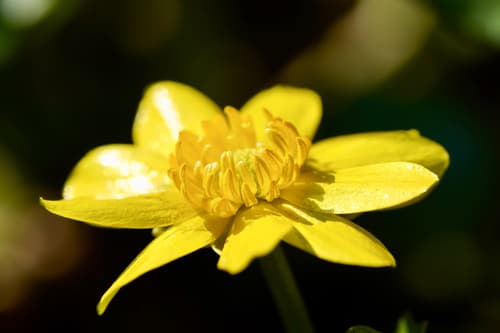 (c) gg_copen, some rights reserved (CC BY-NC)NY ProhibitedLesser celandineFicaria vernaIntroduced as an ornamental ground cover for its early, glossy yellow flowers; the first American record is from Pennsylvania in 1867. It is still sold in some catalogs under the name fig buttercup.Now (Sep): Gone
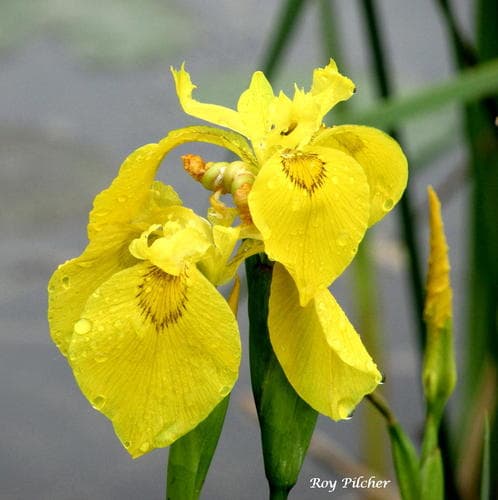 (c) roy pilcher, some rights reserved (CC BY-NC), uploaded by roy pilcherNY ProhibitedYellow flag irisIris pseudacorusIntroduced as an ornamental for ponds and water gardens in the late 1800s and also planted in sewage treatment lagoons because it takes up nutrients and metals. Escaped from garden ponds into natural wetlands.
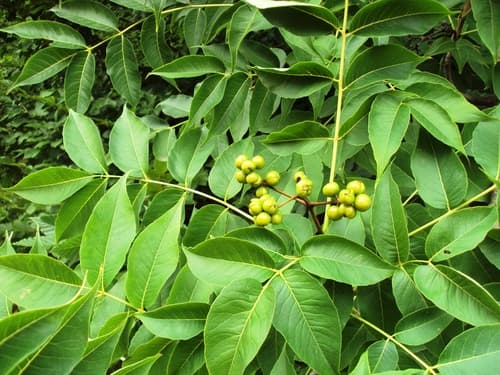 (c) Andrii Churilov, some rights reserved (CC BY-NC), uploaded by Andrii ChurilovNY ProhibitedAmur corktreePhellodendron amurenseIntroduced to the United States around 1856 through the Arnold Arboretum and promoted as a tough, pest-free street tree in the 20th century. New York City parks and Long Island campuses planted it widely.
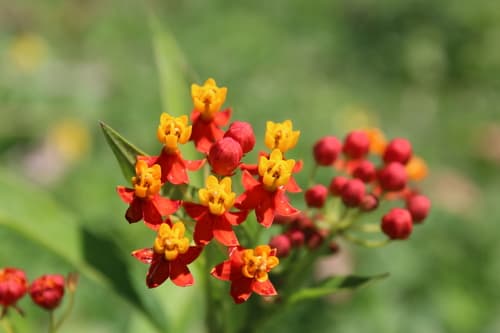 (c) Ricard Busquets Reverte, some rights reserved (CC BY), uploaded by Ricard Busquets ReverteAvoid plantingTropical milkweedAsclepias curassavicaSold across the United States since the mid-20th century as an easy annual milkweed for butterfly gardens, and heavily promoted during the monarch-decline publicity of the 2000s. Big-box stores still stock it every spring, often labeled simply as milkweed.
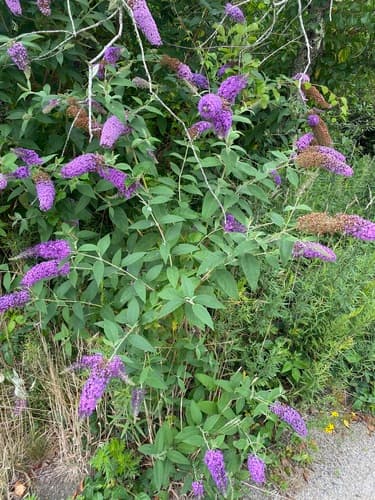 (c) aquadragonfly, some rights reserved (CC BY-NC)Avoid plantingButterfly bushBuddleja davidiiIntroduced to Britain in the 1890s and to America soon after. It exploded in popularity as a butterfly-garden plant in the 1980s and 1990s and is now one of the best-selling shrubs in the country.