native plants · cultivars · garden design
Native Plants vs. Hybrids and Cultivars: What Pollinators Actually Need
Double coneflowers, purple-leaved ninebark, sterile butterfly bush: why many garden-center hybrids and cultivars feed fewer pollinators than straight native species, and how to tell which ones are still worth planting.
By Aidan and Ben Ellis · Published September 8, 2026 · Updated September 28, 2026 · 6 min read
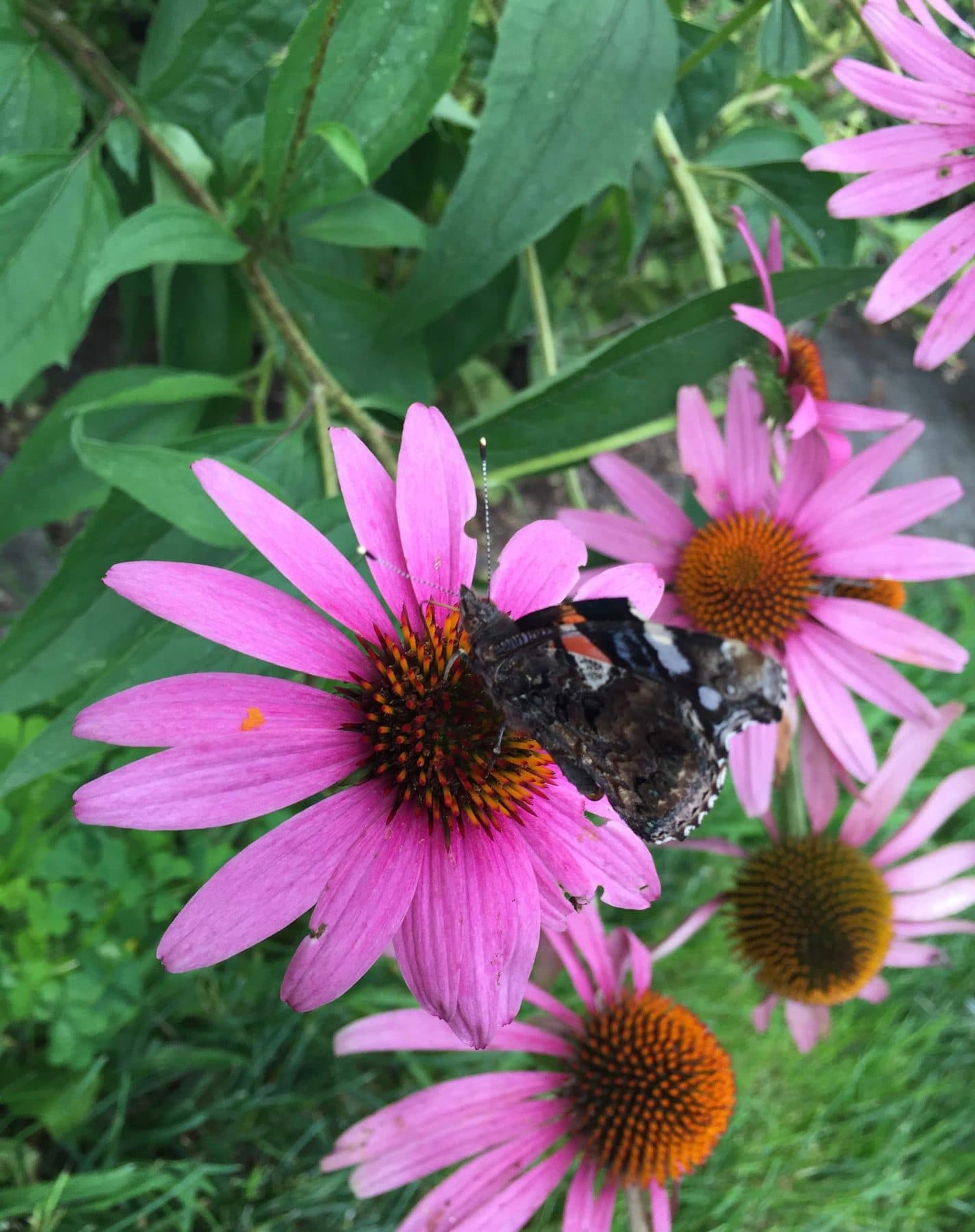
Walk into a garden center in June and you will see a coneflower with pom-pom double flowers in mango orange, a ninebark with nearly black leaves, and a butterfly bush labeled pollinator friendly. All three were bred from plants that feed pollinators. Whether they still do is a different question.
Why native species matter in the first place
Insects and plants co-evolved. About 90 percent of plant-eating insects are specialists that can only digest a narrow set of related plants: monarchs on milkweed, spicebush swallowtails on spicebush, fritillaries on violets, and dozens of bee species that collect pollen from only one plant family. Those insects, especially caterpillars, are what feed baby birds. A chickadee pair needs six to nine thousand caterpillars to raise one brood.
Native plants also bloom on the local schedule, offer the nectar and pollen chemistry local bees evolved to use, and do not escape into wild areas. Non-native ornamentals often do none of those things, and some become invasive.
What a cultivar is
A cultivar (cultivated variety) is a plant selected or bred for a trait, then propagated to keep it. You can spot one by the name in single quotes: Echinacea purpurea 'Magnus'. A hybrid is a cross between two species. Native cultivars, sometimes called nativars, start from a native species but may be changed in ways that matter to insects.
Research at the Mt. Cuba Center in Delaware, the University of Vermont, and elsewhere has tested this directly by counting insect visits to species and their cultivars side by side. The pattern is consistent:
- Flower shape changes hurt the most. Double flowers (extra petals) usually replace the nectar- and pollen-bearing parts of the flower. Double coneflowers and double bee balms got a fraction of the visits the straight species received; some got almost none.
- Leaf color changes hurt caterpillars. Purple- and red-leaved cultivars (ninebark, elderberry, some coral bells) are loaded with anthocyanins that make leaves harder to digest. Caterpillars fed on them grew less or died.
- Flower color changes are mixed. Some color shifts made no difference; others, especially toward white in normally colored flowers, reduced visits.
- Size changes are mostly fine. Compact selections ('Baby Joe' Joe Pye weed, 'Little Lemon' goldenrod) that keep the natural flower form performed about as well as the species. These are the ones we use in our planters.
- Sterile cultivars offer nothing to seed-eating birds and, if the plant was bred for sterility to stop it spreading (as with newer butterfly bush), that is a clue the parent is invasive.
How to shop
- Prefer the straight species when you can get it. Native nurseries on Long Island grow them, often from local seed.
- If you buy a cultivar, choose one selected for habit or disease resistance rather than for a new flower form or leaf color. Mildew-resistant garden phlox and compact Joe Pye weed are good examples.
- Avoid doubles entirely.
- Read the tag for the species name. Marketing names like Summer Sky or PowWow Wild Berry tell you nothing about what the plant is.
- Ask whether the plants were treated with neonicotinoid insecticides. Many mass-market growers still use them, and the residue ends up in nectar and pollen.
The bottom line
All of the plants in the Pollinate Happiness benches are native species or compact selections that keep the wild flower shape, and the difference is visible from ten feet away: the coneflowers at Wawapek are covered in bees and butterflies, while the doubles two towns over sit empty. Striking a balance between aesthetics and ecological function is possible. It just starts with the plant, not the color chart.
Browse the plants we use or find natives for your site with the Native Plant Finder.
Sources
- Mt. Cuba Center, Echinacea Trial Report, Mid-Atlantic Region - https://mtcubacenter.org/trials/echinacea-mid-atlantic-region/
- Annie S. White, "From Nursery to Nature: Evaluating Native Herbaceous Flowering Plants Versus Native Cultivars for Pollinator Habitat Restoration," Ph.D. dissertation, University of Vermont (2016), summarized by the Ecological Landscape Alliance - https://www.ecolandscaping.org/07/designing-ecological-landscapes/native-plants/citizen-scientists-help-parse-the-native-nativar-debate/
- Emily G. Tenczar and Vera A. Krischik, "Effects of New Cultivars of Ninebark on Feeding and Ovipositional Behavior of the Specialist Ninebark Beetle," HortScience 42(6) (2007), summarized by University of Maryland Extension's Maryland Grows - https://marylandgrows.umd.edu/2018/11/12/the-nativar-dilemma-the-case-of-my-purple-ninebark-the-leaf-beetle/
- Audubon, "New Research Further Proves Native Plants Offer More Bugs for Birds," on Douglas Tallamy's caterpillar research - https://www.audubon.org/news/new-research-further-proves-native-plants-offer-more-bugs-birds
Written by Aidan and Ben Ellis of Pollinate Happiness, Long Island, NY. Found an error? Let us know.