monarchs · milkweed · native plants
Native Milkweed vs. Tropical Milkweed: Why It Matters for Monarchs
Tropical milkweed is sold everywhere as monarch food, but on Long Island it can disrupt migration and spread the OE parasite. Here is the science, and the three native milkweeds to plant instead.
By Aidan and Ben Ellis · Published September 8, 2026 · Updated September 28, 2026 · 6 min read
Milkweed is the only plant a monarch caterpillar can eat, so planting milkweed is the single best thing a gardener can do for monarchs. But the milkweed sold in most big-box garden centers, tropical milkweed (Asclepias curassavica), is the wrong one for Long Island. Here is why, and what to plant instead.
What tropical milkweed is
Tropical milkweed is native to Mexico, Central America, and South America. It has narrow leaves and showy red-orange and yellow flowers, it grows fast from seed, and it blooms nonstop until frost. Nurseries love it because it looks great in a pot in May. Monarchs will happily lay eggs on it. That is where the trouble starts.
Problem 1: It does not stop
Native milkweeds go dormant in late summer. Their leaves toughen and yellow, which is one of the cues that tells the last monarch generation of the year to stop breeding, store fat, and fly to Mexico instead.
Tropical milkweed stays lush and green until a hard frost. Research from the University of Georgia and others has found that monarchs encountering fresh tropical milkweed in fall are more likely to break reproductive diapause and keep laying eggs. Those late caterpillars rarely survive, and the adults that lingered have missed their window to migrate. In the Southeast, where tropical milkweed survives the winter, it has created year-round breeding populations that no longer migrate at all.
On Long Island the plant dies with frost, so the effect is smaller than in Texas or Florida, but warm Octobers are becoming the norm here, and the cue is still wrong.
Problem 2: OE
Ophryocystis elektroscirrha, or OE, is a protozoan parasite of monarchs. Infected adults scatter spores on milkweed leaves; caterpillars eat the spores; heavily infected butterflies emerge crumpled, weak, or unable to fly.
Native milkweed dies back to the ground every year, which wipes the slate clean. Tropical milkweed keeps the same leaves for months, and spores accumulate. Monarchs sampled on tropical milkweed in the southern U.S. carry OE at rates several times higher than the migratory population. Every extra generation that breeds on the same leaves makes it worse.
The fix: plant native milkweed
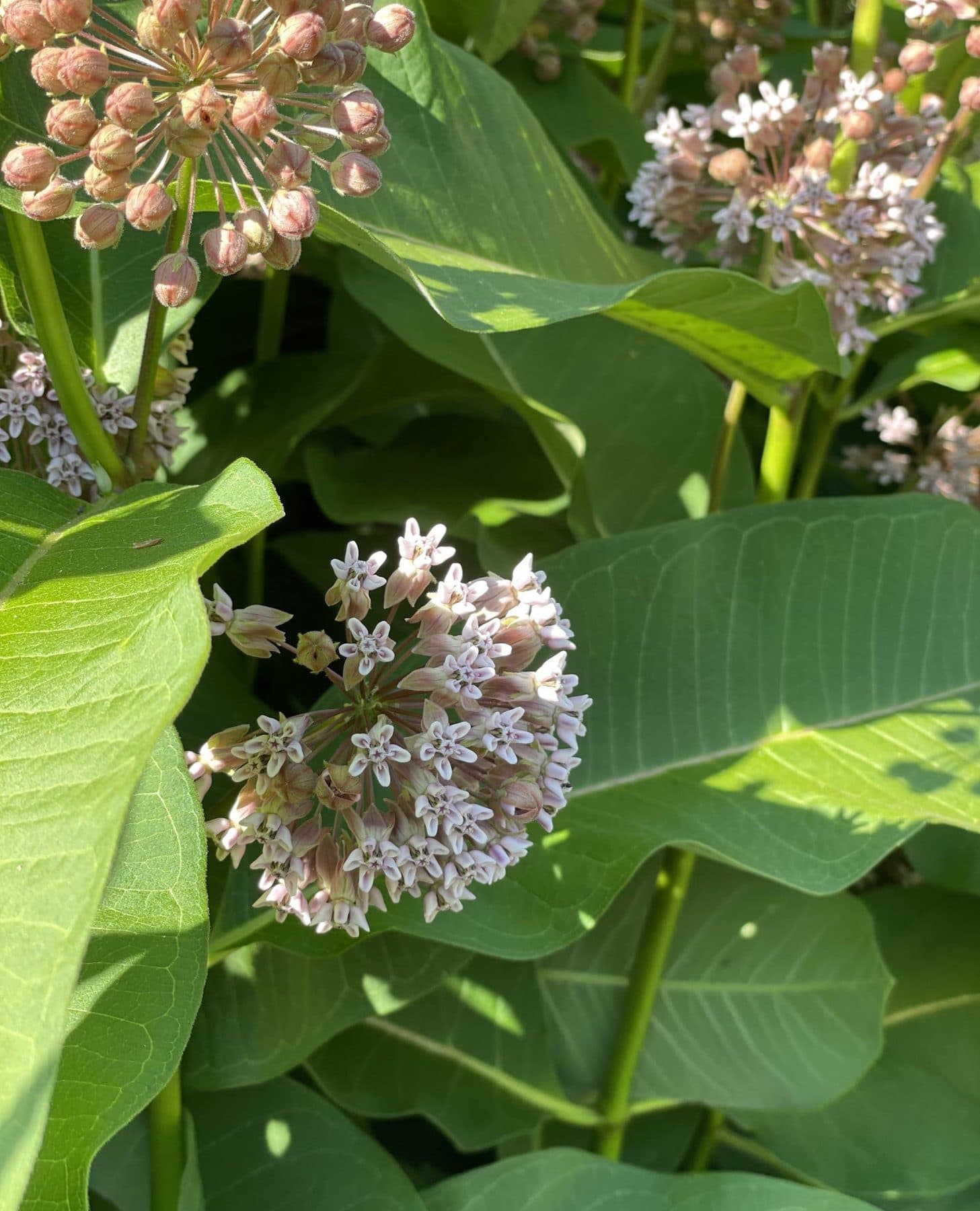
Long Island has three native milkweeds that cover every garden situation. All three are hosts for monarchs, all three feed a crowd of bees and butterflies with their nectar, and all three go dormant on schedule.
| Native milkweed | Best for | Height | Bloom |
|---|---|---|---|
| Common milkweed (Asclepias syriaca) | Meadows, large beds, anywhere it can spread. The most-used monarch host. Intensely fragrant. | 3–5 ft | June–August |
| Swamp milkweed (Asclepias incarnata) | Damp soil, rain gardens, and tidy garden beds. Clump-forming, does not run. Monarchs favor its soft leaves for eggs. | 3–4 ft | July–August |
| Butterfly weed (Asclepias tuberosa) | Dry, sandy, sunny spots and containers. Brilliant orange. Deer usually skip it. | 1–2 ft | June–August |
We planted common milkweed in our first bench at Wawapek Preserve. You can read more on our milkweed plant page.
If you already have tropical milkweed
You do not need to rip it out in a panic. Cut it to the ground in early September so it is not offering fresh leaves during migration, do not let it reseed, and replace it with a native the next spring. Long Island native nurseries on our Resources page carry all three natives, and many sell local-ecotype plants grown from Long Island seed.
Tracking monarchs near you
Curious when monarchs actually arrive in your neighborhood? Our Monarch Tracker shows recent community sightings by zip code, month by month, along with how many milkweed observations have been logged nearby.
Sources
- Dara A. Satterfield, John C. Maerz, and Sonia Altizer, "Migratory monarchs that encounter resident monarchs show life-history differences and higher rates of parasite infection," Ecology Letters (2018) - https://onlinelibrary.wiley.com/doi/10.1111/ele.13144
- Monarch Joint Venture, "Tropical Milkweed" fact sheet - https://monarchjointventure.org/faq/tropical-milkweed
- Xerces Society, "Tropical Milkweed - a No-Grow" - https://xerces.org/blog/tropical-milkweed-a-no-grow
- University of Georgia, "Migrating Monarchs Facing Increased Parasite Risks" (2018) - https://phys.org/news/2018-08-migrating-monarchs-parasite.html
Written by Aidan and Ben Ellis of Pollinate Happiness, Long Island, NY. Found an error? Let us know.