Where it came from
China and the Korean peninsula.
How it got here
Arrived in solid wood packing material from China. First discovered in Brooklyn in 1996 boring into Norway maples, then found in Amityville and Massapequa on Long Island in 1999, and later in New Jersey, Massachusetts, Ohio, and South Carolina.
What it does to the ecosystem
Larvae bore deep into the heartwood of maples, birches, elms, willows, horse chestnuts, and other hardwoods, structurally weakening and eventually killing them. Unlike most borers it attacks healthy trees. If it escaped into the northern hardwood forest, it would threaten the maple syrup and fall foliage economies.
What it costs
Eradication in New York, including Long Island, required cutting down and chipping more than 20,000 trees over two decades and cost hundreds of millions of dollars. The Long Island infestation was declared eradicated in 2019, a genuine success that depends on people still reporting.
Don’t confuse it with
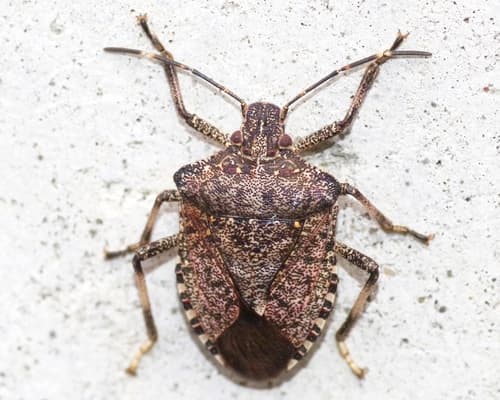
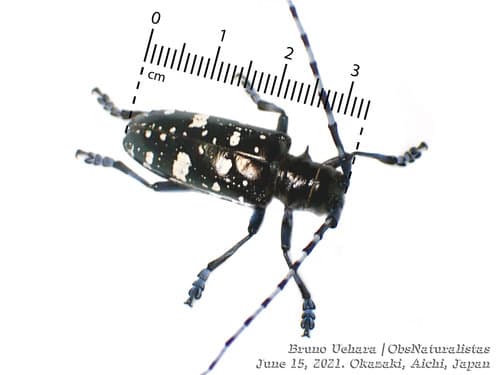
- Whitespotted sawyer (native). The native sawyer has a single white spot at the top of the wing covers and duller, bronzy coloring. The Asian longhorned beetle is glossy jet black with many bright white spots and banded antennae.
How to identify it
Large glossy black beetle with white spots and very long black-and-white banded antennae; dime-sized perfectly round exit holes in trunks; sawdust piles at the base.
What to do
Report immediately to the state or USDA. Do not move firewood.
On Long Island
Eradicated from Nassau and Suffolk after a 20-year effort, but the beetle is still established elsewhere and could return in firewood. Report any glossy black beetle with white spots and long banded antennae.
Worth knowing
- Adults chew perfectly round exit holes about the diameter of a pencil, and the sawdust they push out piles in branch crotches.
- Females chew oval pits in bark to lay each egg, so trunks look pockmarked.
- August is Tree Check Month nationally because that is when adults are most visible.