Where it came from
China, with populations in Vietnam and India; it invaded South Korea in 2006.
How it got here
Egg masses on a shipment of landscaping stone from China hatched in Berks County, Pennsylvania, in 2014. From there it hitchhiked on vehicles, rail cars, and nursery stock. It was confirmed on Long Island in 2020 and is now established in both counties.
What it does to the ecosystem
Adults and nymphs feed in swarms on the sap of more than 70 plants, especially tree-of-heaven, grapevines, maples, black walnut, and hops. Heavy feeding weakens vines and young trees, and the honeydew they excrete coats everything below in sticky sugar that grows black sooty mold, smothering leaves and making decks and cars filthy.
What it costs
Pennsylvania estimated potential losses of hundreds of millions of dollars a year to its grape, orchard, nursery, and timber industries. Long Island's North Fork wine region is directly in its path.
Don’t confuse it with
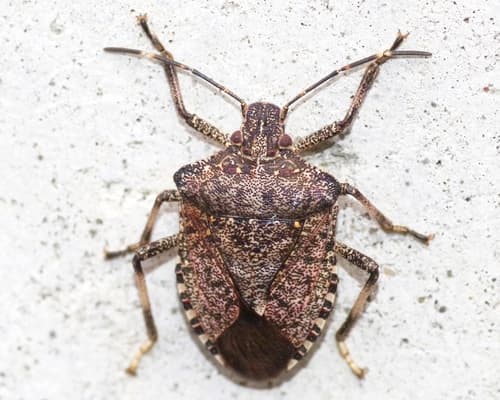
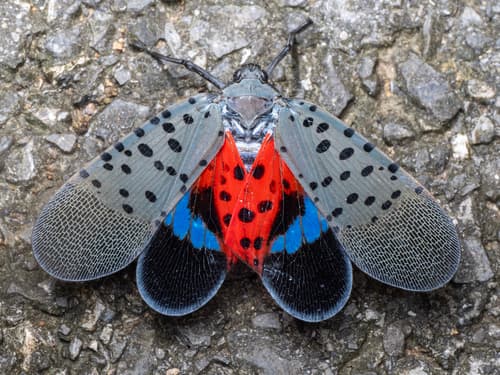
- Native planthoppers and moths. Nothing native looks like the adult; the gray spotted forewings and scarlet hindwings are unique. Early nymphs are sometimes confused with immature stink bugs, but lanternfly nymphs hop and have white polka dots.
- Boxelder bug. Boxelder bugs are red and black adults, not nymphs, and do not hop.
How to identify it
Adults (July to December) are an inch long with gray spotted forewings and red-and-black hindwings; nymphs are black with white spots, turning red before adulthood. Egg masses look like smears of gray putty.
What to do
Squash nymphs and adults, scrape egg masses into alcohol from September to May, and remove tree-of-heaven, its favorite host. Report in newly affected areas.
On Long Island
Established island-wide since 2020, with heavy populations in Nassau and western Suffolk. Squash nymphs and adults, scrape egg masses October through April, and check your car before driving east toward the vineyards.
Worth knowing
- It is not a fly and cannot bite or sting; it is a planthopper related to cicadas.
- Adults are weak fliers but strong hoppers, and they spread mainly by laying eggs on things that move: cars, trains, firewood, stone.
- Praying mantises, spiders, chickens, and some birds eat them, and native predators are slowly catching on.
- Removing tree-of-heaven, its favorite host, is the most effective long-term local control.