Where it came from
China, Japan, Korea, and Taiwan.
How it got here
First collected in Allentown, Pennsylvania, in 1998, having arrived in shipping containers a few years earlier. It spread through the Mid-Atlantic in the 2000s and caused catastrophic orchard damage in 2010.
What it does to the ecosystem
It feeds on more than 100 plants, piercing fruit and seeds and leaving corky, dimpled damage. In natural areas it competes with native insects, and its sheer numbers in fall home invasions make it a nuisance pest.
What it costs
The 2010 outbreak cost Mid-Atlantic apple growers an estimated 37 million dollars in one season. Homeowners spend on sealing and pest control every fall.
Don’t confuse it with
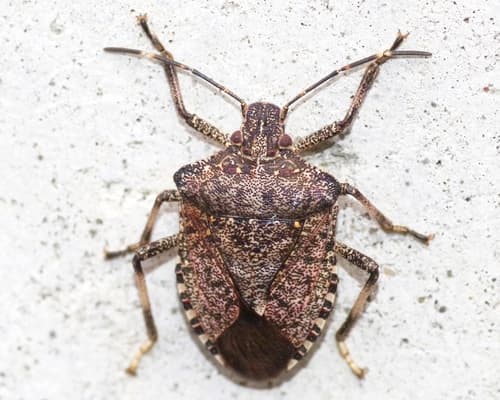
- Native brown stink bugs and the spined soldier bug (a beneficial predator). The brown marmorated has distinct alternating light and dark bands on the antennae and along the edge of the abdomen, and smooth (not toothed) shoulders. The spined soldier bug has sharp shoulder spines and eats caterpillars; leave it alone.
How to identify it
Shield-shaped, mottled brown, with alternating light and dark bands on the antennae and along the edge of the abdomen.
What to do
Seal entry points in fall; vacuum indoor bugs. Not a garden emergency, but worth knowing.
On Long Island
Common in gardens and homes island-wide. Not a conservation emergency, but worth telling apart from the beneficial native predatory stink bugs.
Worth knowing
- Marmorated means marbled, for the mottled brown pattern.
- A tiny parasitic wasp from Asia, the samurai wasp, arrived on its own and is now spreading across the Northeast, parasitizing its eggs.
- Squashing them releases a cilantro-like odor; vacuuming is better.