students · grants · community projects
How Students Can Fund and Launch a Community Environmental Project
Aidan and Ben were in 5th and 6th grade when they won their first grant. Here is how young people can fund a native planting, cleanup, or habitat project: youth grants, Eagle Scout projects, sponsors, crowdfunding, and how to pitch a host site.
By Aidan and Ben Ellis · Published September 8, 2026 · Updated September 28, 2026 · 7 min read
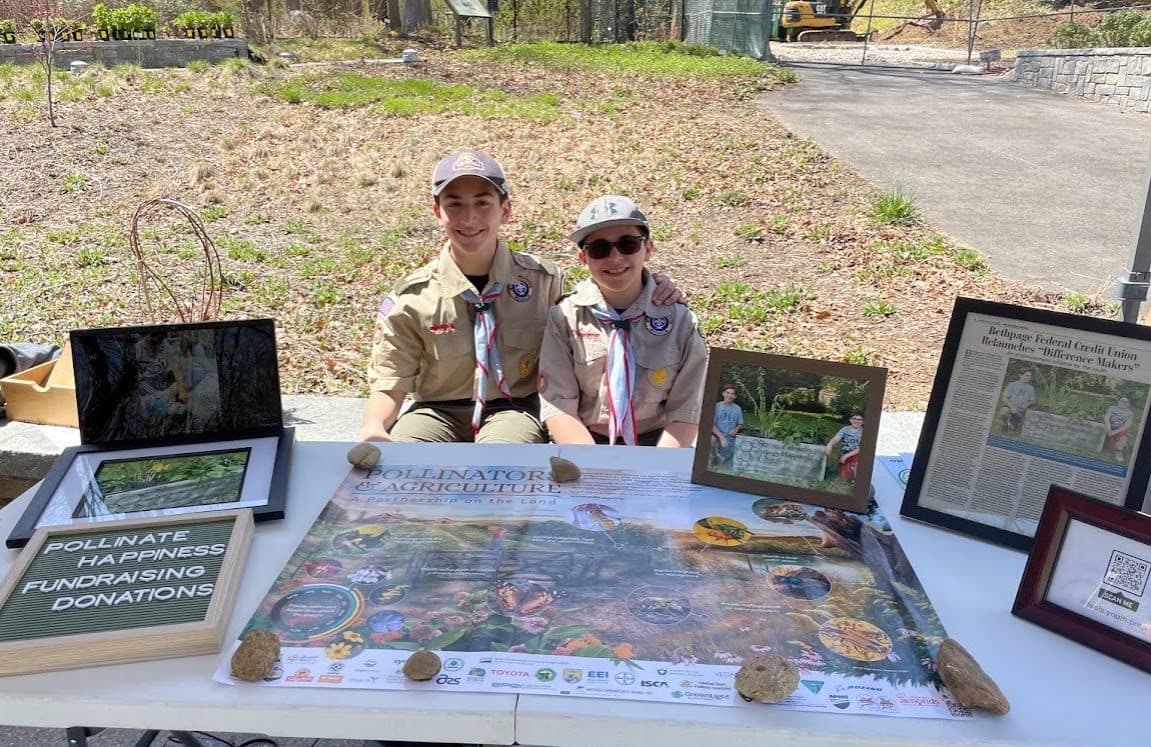
Pollinate Happiness started with two kids, a backyard pollinator garden, and a grant application. Aidan was in 5th grade and Ben was in 6th when they entered Bethpage Federal Credit Union's Difference Makers competition with a plan to build a native plant bench for a public park. They won, and in June 2021 the first bench went in at Wawapek Preserve. Five installations later, here is what we learned about getting a student project funded and built.
Start with something you already care about
Every good application we have read or written starts with a specific, personal reason. Ours was the monarchs and bumble bees in our own garden and the realization that most people had never seen a milkweed plant up close. Judges can tell the difference between a project someone wants to do and one written to fit a grant.
Keep the first project small and finishable: one bench, one bed, one trail cleanup. You can grow from there, and a finished first project is the best fundraising tool you will ever have.
Where the money is
Youth grants. Credit unions, utilities, and community foundations run youth programs with small grants ($500 to $5,000) and far less competition than adult grants. Bethpage Federal Credit Union's Difference Makers is the one that funded us. Others to look for on Long Island and beyond: PSEG Long Island community grants, Long Island Community Foundation, local Rotary and Kiwanis clubs, garden clubs (many have youth conservation awards), and the Audubon and Sierra Club chapters. Ask your school's science department and your county legislator's office; both hear about grants first.
Eagle Scout and Gold Award projects. Two of our five installations were Eagle Scout projects with Troop 170. A Scout project brings a crew, a structure for planning, and credibility with host sites and donors. The Theodore Roosevelt Sanctuary and Nassau County Museum of Art planters were both built this way.
In-kind sponsors. Materials are easier to get than cash. The Home Depot supplied all the lumber and hardware for our sensory planter and nest boxes free of charge. Nice-Planter supported our Hicksville Library planter. Local nurseries often donate plants for a public project if you credit them on the sign. Walk in with a one-page description, a photo, and a specific list.
Crowdfunding. A GoFundMe or similar page lets family, neighbors, and people who see the bench chip in. Put the link on the sign and the website. Ours is here.
Plant sales and tabling. Audubon invited us to share the project at their annual native plant sale, which raised money and led directly to our third installation. Say yes to every table.
How to pitch a host site
Parks, libraries, nature centers, museums, and schools all want this kind of project; they just need to trust that you will finish it and that it will not become their problem. Bring:
- A one-page proposal with a photo or sketch, dimensions, the plant list, and who pays for what.
- A maintenance plan that asks very little of them: weekly watering the first summer, then almost nothing.
- A timeline with a specific installation date.
- Proof you have done it before, even if that is a photo of your backyard garden.
Ask for a specific spot, and ask who to talk to about a sign. Get the agreement in writing, even an email.
Writing the application
Grant forms ask the same things in different words:
- The problem. Native plants and pollinators are declining, and most people do not know what native plants are or why they matter.
- Your solution. A visible, educational native planting in a public place, with a sign and a website.
- Who benefits. Everyone who passes; the pollinators; you, because you learn to build things and talk to adults.
- Budget. Itemized, realistic, with in-kind donations listed. See our planter bench guide for real numbers.
- How you will measure success. Installed on time, photos of pollinators using it, visitor count, follow-up installations.
Write it yourself. Adults can proofread, but judges of youth grants can tell when a parent wrote it, and they are not impressed.
After you win
Send thank-you notes. Send photos to the funder, the host, and the local paper (our first installation made the Syosset Advance and the Jericho-Syosset News Journal). Put every supporter on your website. Then start planning the next one, because the second grant is much easier than the first.
Questions? Contact us. We are happy to talk to students planning a project.
Sources
- Bethpage Federal Credit Union, Difference Makers - https://www.bethpagefcu.com/community/volunteer.aspx
- PSEG Foundation, Neighborhood Partners Program (2025) - https://www.psegliny.com/en/Newsroom/2025/052726-Foundation
- Long Island Community Foundation, Youth Development - https://licf.org/give/where-to-give/youth-dev/
- Scouting America, Eagle Scout Project Requirements and Resources - https://eagleprojects.scoutlife.org/project-resources/
Written by Aidan and Ben Ellis of Pollinate Happiness, Long Island, NY. Found an error? Let us know.