bloom calendar · native plants · Long Island
Long Island Pollinator Bloom Calendar: What Native Plants Flower Each Month
A month-by-month calendar of native plant bloom times on Long Island and what pollinators depend on them, from March spicebush and April blueberry through October asters and goldenrod, so your garden never has a gap.
By Aidan and Ben Ellis · Published September 8, 2026 · Updated September 28, 2026 · 6 min read
A pollinator garden fails quietly when it has gaps: three weeks in May with nothing open, or a September with no nectar for migrating monarchs. This calendar lists reliable Long Island natives by the month they start blooming, with the pollinators that depend on each window. Dates shift a week or two with the weather and from the South Shore to the North Shore, but the order holds.
March
- Northern spicebush (Lindera benzoin): tiny yellow flowers on bare branches, the first shrub to bloom in the woods. Feeds the earliest small bees and flies.
- Red maple (Acer rubrum): overlooked, but its flowers are a major early pollen source for honey bees and mining bees.
- Pussy willow (Salix discolor): pollen for emerging bumble bee queens.
April
- Highbush blueberry (Vaccinium corymbosum): white bells worked by bumble bee queens and the specialist southeastern blueberry bee.
- Serviceberry (Amelanchier canadensis): white clouds along the woodland edge; mining bees and early butterflies.
- Eastern redbud (Cercis canadensis): magenta flowers for mason bees and bumble bees.
- Moss phlox (Phlox subulata): ground-level pink and lavender carpets for spring azures and early swallowtails.
- Golden ragwort, foamflower, wild geranium, common blue violet (fritillary host plant): the spring woodland floor.
- Wild red columbine (Aquilegia canadensis): times its bloom to the return of ruby-throated hummingbirds around April 25.
May
- Golden Alexanders (Zizia aurea): yellow umbels for small bees; black swallowtail host.
- Foxglove beardtongue (Penstemon digitalis): white tubes for bumble bees and hummingbirds.
- Lyreleaf sage, eastern bluestar, lanceleaf coreopsis.
- Black cherry and oaks flower now, feeding bees and starting the caterpillar crop that nesting birds need.
June
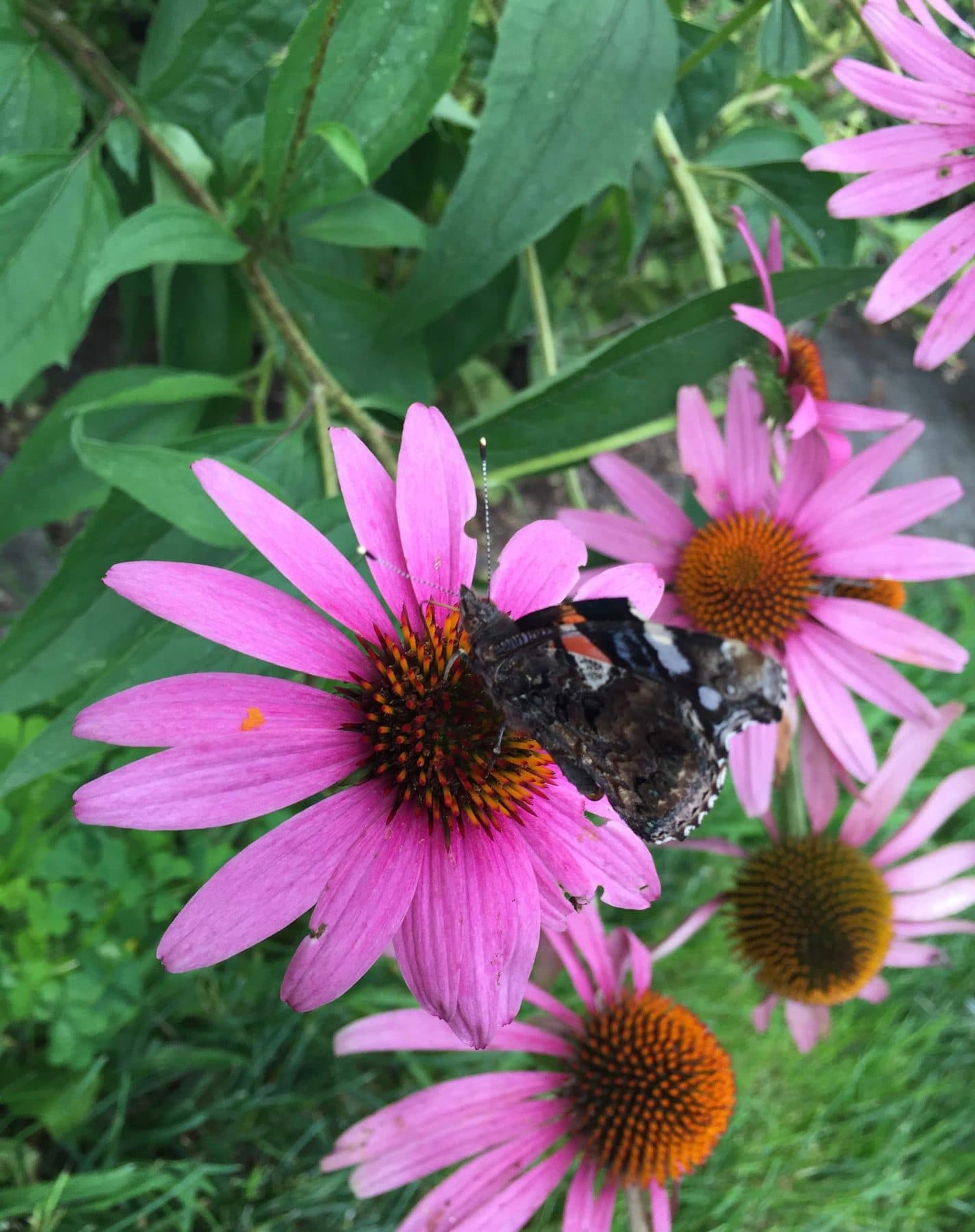
- Purple coneflower (Echinacea purpurea) opens and does not stop until September.
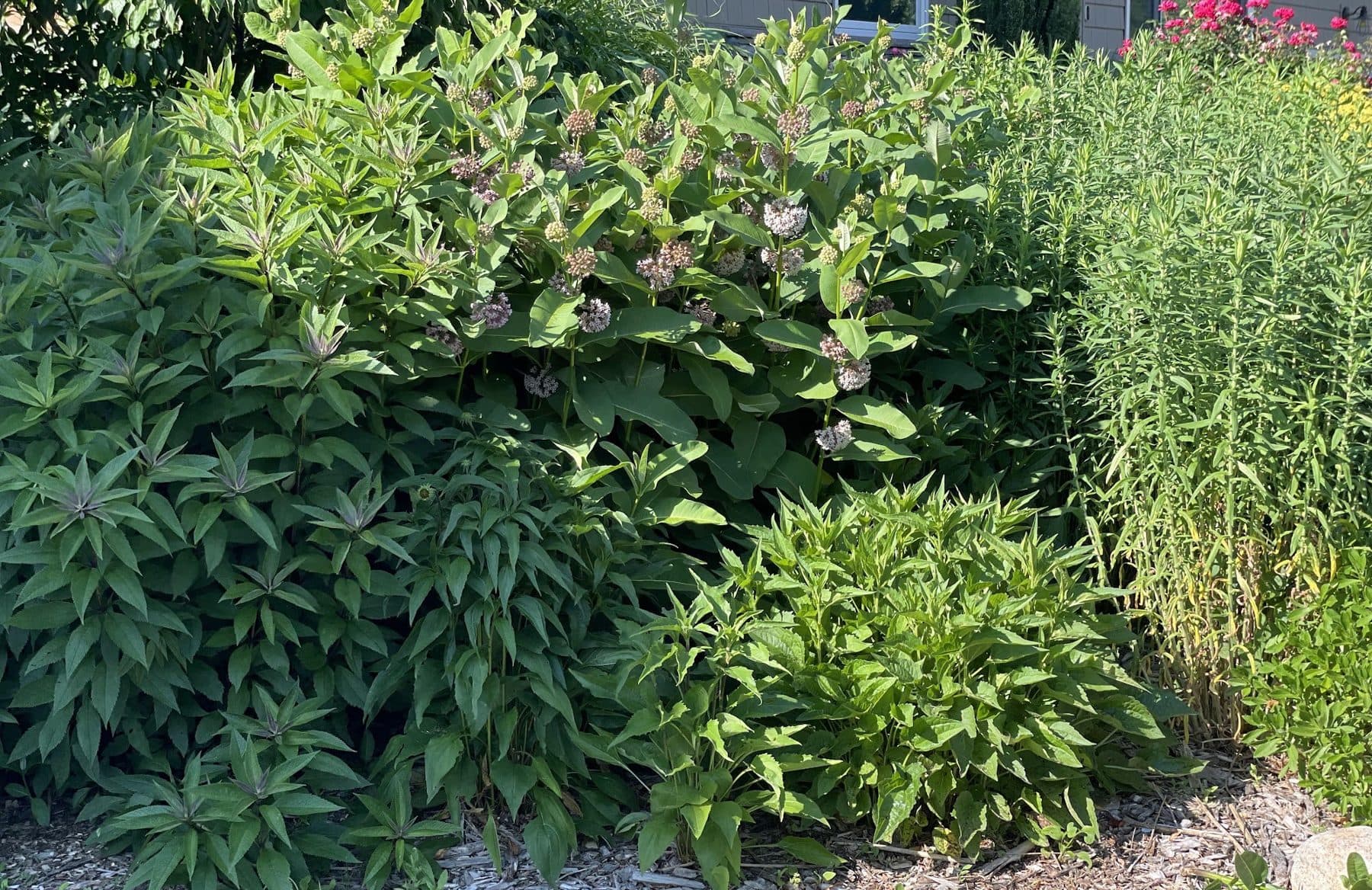
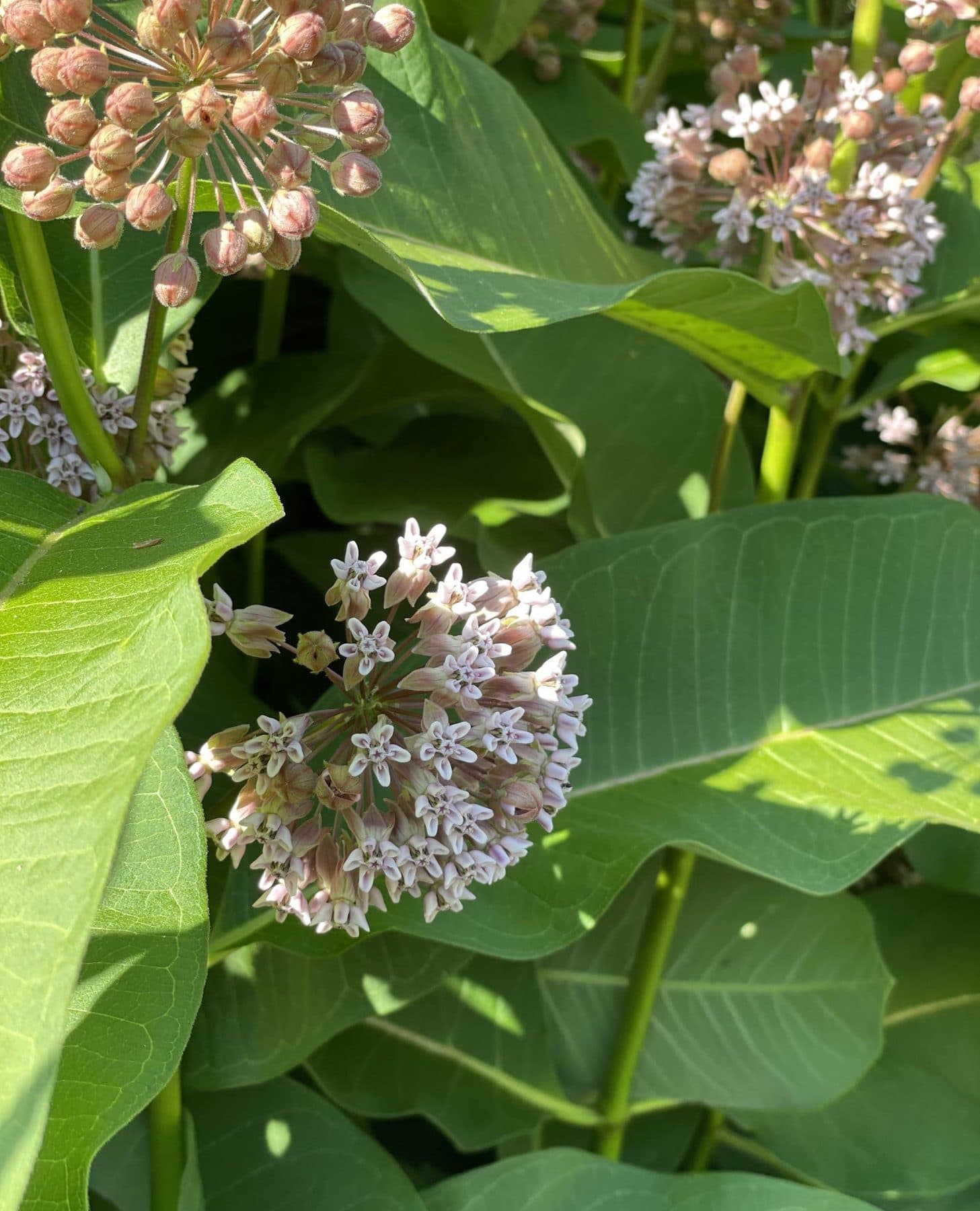
- Common milkweed (Asclepias syriaca) and butterfly weed (A. tuberosa): the first monarchs of the year arrive on Long Island in late May or June and lay eggs immediately.
- Black-eyed Susan (Rudbeckia hirta).
- Buttonbush (Cephalanthus occidentalis): white spheres mobbed by swallowtails.
- Winterberry holly flowers (small, but the berries later are the point).
July
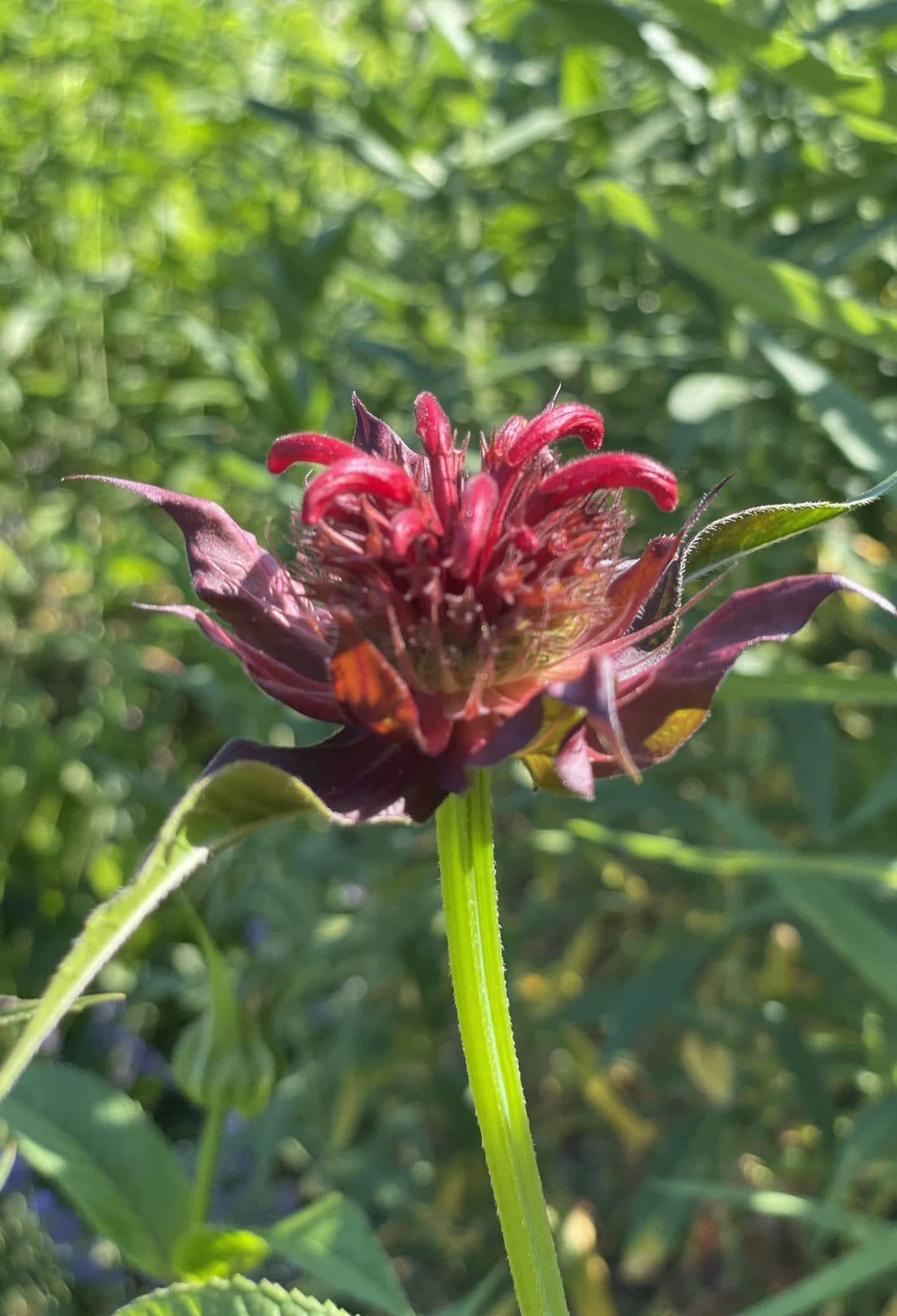
- Bee balm (Monarda didyma) and wild bergamot (M. fistulosa): peak hummingbird and clearwing moth season.
- Swamp milkweed (Asclepias incarnata): monarchs' favorite for eggs.
- Clustered mountain mint (Pycnanthemum muticum): the single most insect-covered plant in most gardens.
- Dense blazing star (Liatris spicata), garden phlox (Phlox paniculata), anise hyssop, false sunflower, sweet pepperbush (Clethra alnifolia) late in the month.
August
- Joe Pye weed (Eutrochium spp.): tiger swallowtails and monarchs by the dozen.
- New York ironweed (Vernonia noveboracensis): magenta, deer-proof, butterfly magnet.
- Cardinal flower (Lobelia cardinalis): hummingbirds only.
- Swamp rose mallow, blue vervain, evening primrose (opens at dusk for sphinx moths).
- Little bluestem and switchgrass flower, feeding skipper caterpillars all summer.
- Early goldenrods begin.
September
- Goldenrod (Solidago spp.) peaks: the fuel for the monarch migration and hundreds of bee species. It does not cause allergies.
- New England aster (Symphyotrichum novae-angliae) and smooth aster: purple and blue to pair with the gold.
- White wood aster (Eurybia divaricata) for shade.
- Monarchs stream south along both shores; this is the month to watch our Monarch Tracker.
October
- Late asters and goldenrod carry the last bumble bees and the stragglers of the migration.
- Witch hazel (Hamamelis virginiana) opens its ribbon-like yellow flowers as the leaves drop, feeding the last flies and moths of the year.
- Seed heads take over: coneflower, black-eyed Susan, and grasses feed goldfinches, sparrows, and juncos from now until March.
Filling your gaps
Count what you have in each month. Most Long Island gardens are heavy in June and July and empty in April and September. Fix April with blueberry, moss phlox, and columbine; fix September with three goldenrods and three asters. Then use the Native Plant Finder, which lets you filter by bloom month, to fill anything else.
Sources
- Lady Bird Johnson Wildflower Center, Native Plant Database - https://www.wildflower.org/plants/
- USDA Natural Resources Conservation Service, PLANTS Database - https://plants.usda.gov/
- Xerces Society, Pollinator Conservation Resources: Northeast Region - https://xerces.org/pollinator-resource-center/northeast
- Journey North, Monarch Butterfly Migration Tracking - https://journeynorth.org/projects
Written by Aidan and Ben Ellis of Pollinate Happiness, Long Island, NY. Found an error? Let us know.