Who it feeds
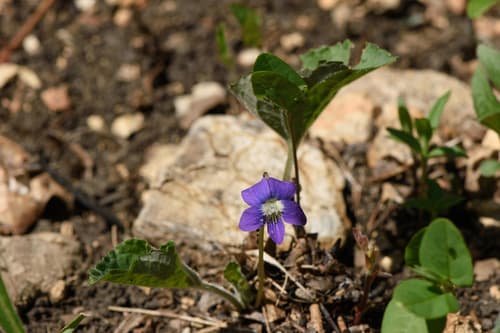
The sole host plants of the great spangled fritillary and other fritillary butterflies, whose caterpillars feed at night on violet leaves. Mining bees pollinate the spring flowers; a specialist bee, Andrena violae, depends on them.
Host plant for: Great spangled fritillary and other fritillaries.
What it does for the place
A native lawn plant that stays green through drought, feeds fritillaries, and tolerates mowing. Letting it be is the easiest butterfly conservation there is.
The story
The state flower of New Jersey, Rhode Island, Illinois, and Wisconsin, and the lawn weed people spend money killing. Violets have been eaten, candied, and made into syrup since ancient Greece.
Worth knowing
- Violets also produce hidden, self-pollinating flowers underground in summer.
- The leaves and flowers are edible and high in vitamin C.
- Ants carry the seeds away for the oily attachment, planting them.
Saving its seed
Ripe: May, Jun, Jul. Capsules split into three boats and shoot seed.
Collect: Just let it self-sow; it does not need help.
Sow: Rarely grown from seed; divide or take cuttings instead. Needs about 60 days of cold-moist stratification. Move plants by division in spring.
Seed saving calendar for your zip code →