Who it feeds
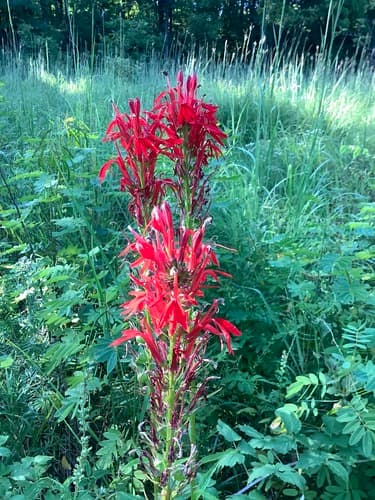
Pollinated almost exclusively by ruby-throated hummingbirds, whose foreheads pick up pollen from the flower's overhead anthers. Swallowtails visit too but rarely pollinate.
What it does for the place
A wetland and streamside plant that thrives with wet feet, stabilizes banks, and provides the reddest flower in the East at exactly the time hummingbirds are fattening for migration.
The story
Named for the scarlet robes of Roman Catholic cardinals when specimens reached Europe in the 1620s; Queen Henrietta Maria of England is said to have been delighted by it. It was used by Indigenous peoples as a ceremonial and love charm plant.
Worth knowing
- The flower's red is invisible to most bees, which is why it depends on birds.
- Plants are short-lived but reseed; do not mulch over the winter rosettes.
- All parts are toxic; deer leave it alone.
Saving its seed
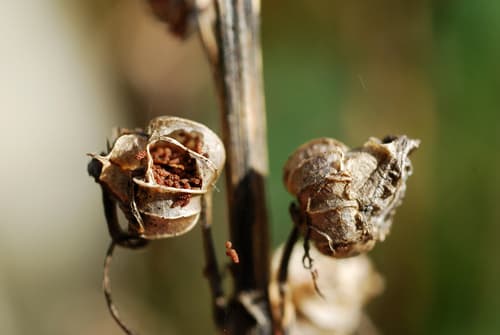
Ripe: Sep, Oct. Capsules along the spike turn brown; seed is like fine dust.
Collect: Cut whole spikes into a paper bag and shake.
Sow: Winter-sow outdoors (jugs or flats) any time after the first hard freeze. Needs about 60 days of cold-moist stratification. Surface sow; needs light. Keep the surface constantly moist until seedlings are up.
Seed saving calendar for your zip code →