Who it feeds
A crucial late nectar source for woodland bees, hover flies, and butterflies in shade where little else flowers; several moths use it as a host.
What it does for the place
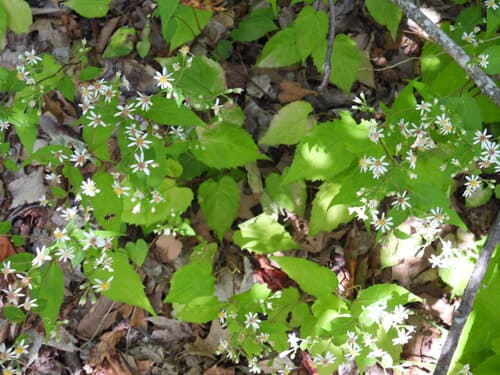
One of the few plants that thrives in dry shade under oaks and maples, where it forms a living ground cover that suppresses stiltgrass and garlic mustard.
The story
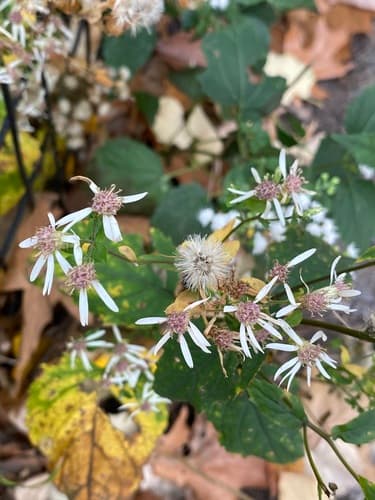
The common aster of the eastern woodland floor, blooming in clouds of small white stars in September along every North Shore trail. Its zigzag stems and heart-shaped leaves make it easy to learn.
Worth knowing
- It spreads politely by rhizome and seed into a dense colony.
- It tolerates root competition from trees that kills most perennials.
- Pair it with Pennsylvania sedge for a native replacement for pachysandra.
Saving its seed
Ripe: Oct, Nov. Fluffy puffs.
Collect: Pinch into a bag.
Sow: Winter-sow outdoors (jugs or flats) any time after the first hard freeze. Needs about 30 days of cold-moist stratification. Surface sow; needs light.
Seed saving calendar for your zip code →
Plant it instead of
- Japanese stiltgrass: An annual grass that carpets shaded woodlands and lawns, suppressing native wildflowers and tree seedlings and changing soil chemistry.