Who it feeds
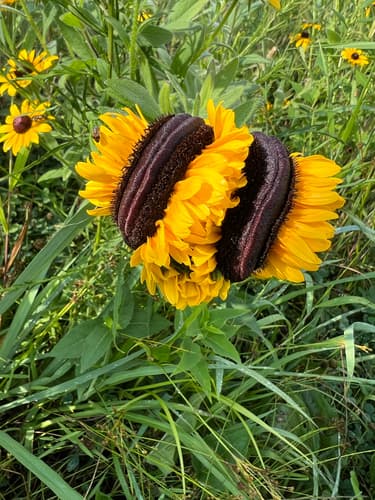
Sunflowers host about 70 caterpillar species in the Northeast, including silvery checkerspot and painted lady, and several specialist bees collect only sunflower pollen. Goldfinches and chickadees eat the seed.
Host plant for: Silvery checkerspot, painted lady.
What it does for the place
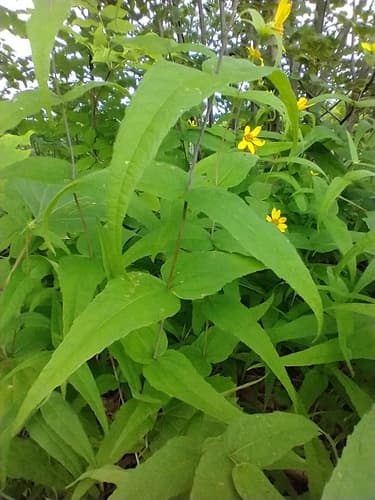
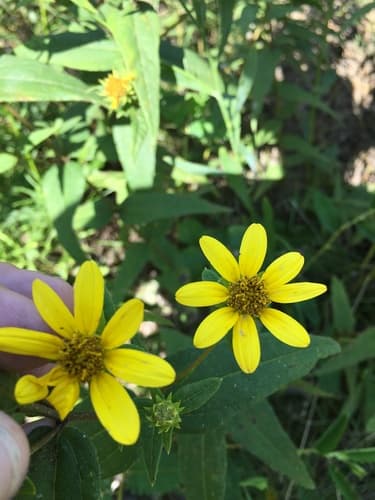
One of the few tall, bright bloomers for dry shade, lighting up woodland edges in August and feeding a specialist bee community.
The story
The sunflower of dry oak woods and edges, a perennial cousin of the annual crop sunflower. Native Americans ate the seeds of many wild sunflowers long before the domesticated form was bred.
Worth knowing
- It spreads by rhizome into colonies; give it room or a root barrier.
- Flowers face the sun and track it slightly through the day.
- The stems are smooth and often purple, unlike hairy field sunflowers.
Saving its seed
Ripe: Sep, Oct. Heads dry; plump gray seeds pull free.
Collect: Collect before finches take them; rub out and winnow.
Sow: Winter-sow outdoors (jugs or flats) any time after the first hard freeze. Needs about 30 days of cold-moist stratification.
Seed saving calendar for your zip code →