Who it feeds
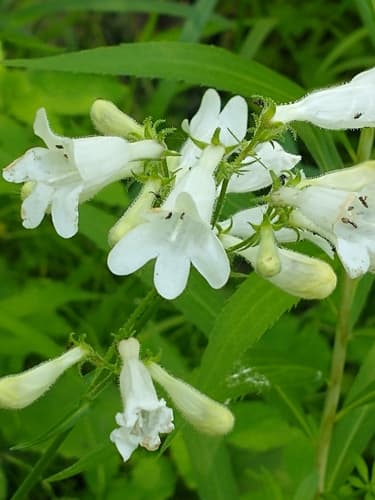
The white tubes are sized for bumble bees, mason bees, and hummingbirds in late May and June, a lean time between spring and summer bloom. Several specialist bees collect penstemon pollen.
What it does for the place
Tough, adaptable, and clumping, it bridges the early-summer gap in nearly any soil and holds its rusty seed heads through winter.
The story
A native penstemon of eastern meadows, named for its resemblance to foxglove and for the fuzzy sterile stamen, the beardtongue, inside each flower. It was Perennial Plant of the Year in 2016 as the cultivar 'Husker Red'.
Worth knowing
- Flowers have nectar guides visible only in ultraviolet.
- The seed heads rattle and are prized in dried arrangements.
- It seeds itself around gently without becoming a pest.
Saving its seed
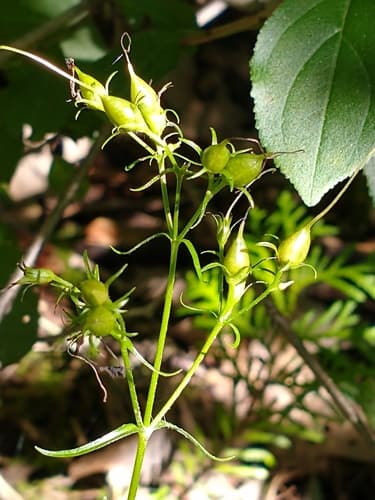
Ripe: Sep, Oct. Pointed brown capsules split at the top.
Collect: Snip capsules, invert and shake out dust-fine seed.
Sow: Winter-sow outdoors (jugs or flats) any time after the first hard freeze. Needs about 60 days of cold-moist stratification. Surface sow; needs light.
Seed saving calendar for your zip code →