Who it feeds
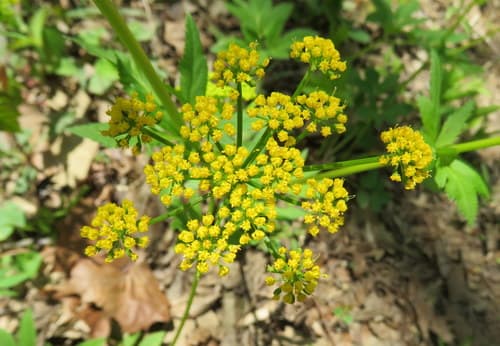
Host plant for black swallowtail caterpillars, which prefer it to garden parsley. Its flat May umbels feed small bees, hover flies, and beneficial wasps when little else is open.
Host plant for: Black swallowtail.
What it does for the place
One of the few native spring nectar plants for meadows and rain gardens, and a host plant that keeps swallowtails off your dill.
The story
A spring-blooming member of the carrot family named for Johann Baptist Ziz, a German botanist, and for its golden umbels. Early herbals confused it with the European alexanders, an old potherb, hence the name.
Worth knowing
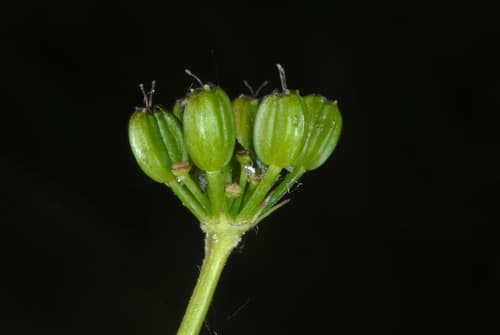
- The seeds are ribbed like tiny footballs and self-sow readily.
- Foliage turns purple-bronze in fall.
- It tolerates wet clay and dry shade alike.
Saving its seed
Ripe: Jul, Aug. Umbels turn from green to dark brown; seeds ribbed and dry.
Collect: Strip seeds from umbels when brown.
Sow: Winter-sow outdoors (jugs or flats) any time after the first hard freeze. Needs about 60 days of cold-moist stratification.
Seed saving calendar for your zip code →