Where it came from
Chinese wisteria from central China; Japanese wisteria from Japan.
How it got here
Chinese wisteria arrived in 1816 and Japanese wisteria in 1830, both as ornamental vines for arbors and porches. Old estates on Long Island's Gold Coast planted them lavishly, and they are still sold.
What it does to the ecosystem
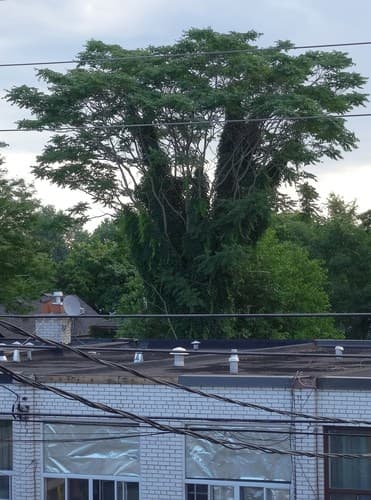
Vines up to 15 inches thick girdle and topple mature trees and form solid canopies in the gaps they create. Root suckers and layering stems spread stands outward decades after the house they were planted at is gone.
What it costs
Removing established wisteria from woodlands requires years of cutting and treatment. It also collapses arbors and damages siding on houses.
Don’t confuse it with
- American wisteria (native). American wisteria blooms in June, after the leaves are out, with shorter, denser flower clusters; the invasive species bloom in May before or with the leaves with long drooping clusters. Chinese wisteria twines counterclockwise, Japanese clockwise.
How to identify it
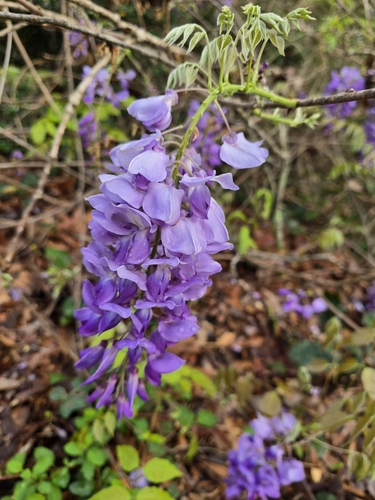
Woody twining vine with compound leaves and long drooping clusters of fragrant purple flowers in May, before or with the leaves.
What to do
Cut and treat; pull root suckers persistently. Replace with the native species, which is far better behaved.
On Long Island
Escaped from old North Shore estates into surrounding woods, where it is toppling trees. Replace with American wisteria, which is better behaved and blooms longer.
Worth knowing
- A single Chinese wisteria in Sierra Madre, California, planted in 1894, now covers more than an acre and is listed as the largest flowering plant in the world.
- All parts, especially the seeds, are poisonous.
- Vines can live more than 100 years and take 15 years to bloom from seed.