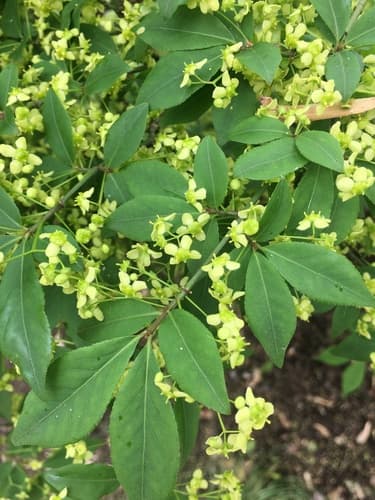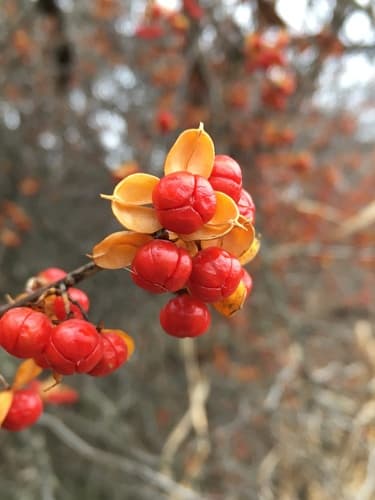
Where it came from
China, Korea, and Japan.
How it got here
Imported to the United States around 1860 as an ornamental vine prized for its orange-and-red fruit in autumn arrangements. It was sold by nurseries for a century, and the wreaths and swags made from it spread seed into every neighborhood.
What it does to the ecosystem
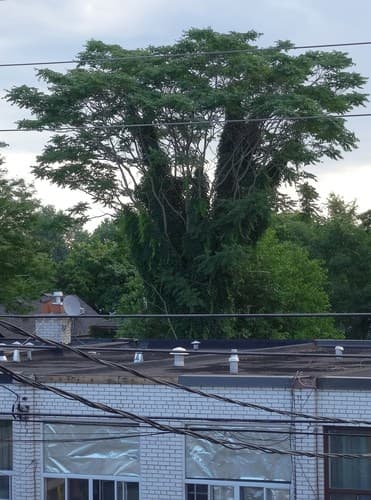
The vines twine so tightly they girdle trunks, and their weight brings down trees in ice storms and wind. A single vine can shade out a tree's canopy. Birds eat the fruit and drop seed along every fence line and woodland edge. It also hybridizes with the rare native American bittersweet, swamping its genes.
What it costs
Utility companies and towns spend heavily cutting it from lines and rights-of-way. Forest owners lose timber trees to girdling and breakage.
Don’t confuse it with
- American bittersweet (native, uncommon). American bittersweet bears its fruit only in clusters at the very tips of the branches; Oriental bittersweet has fruit strung along the stem at every leaf. Native leaves are longer and pointed.
How to identify it
Round, glossy leaves with fine teeth; clusters of yellow-orange capsules along the stem (not just at the tips) that split to show red seeds in fall. Vines can be as thick as an arm.
What to do
Cut vines at chest height and at the ground, treat the lower stump, and pull small plants roots and all. Never use the berries in wreaths.
On Long Island
Everywhere on the North Shore, draping the woods along 25A and climbing every unmanaged hedgerow. Winter, when the orange fruit and spiraling vines are obvious, is the time to find and cut it.
Worth knowing
- New York banned its sale in 2015, but dried bittersweet still shows up in fall decorations; check before you buy.
- Vines have been measured at four inches in diameter and 60 feet long.
- The orange root is distinctive: if you pull a seedling and the root is bright orange, it is bittersweet.