Where it came from
Japan.
How it got here
Seeds arrived at Boston's Arnold Arboretum in 1875, and the plant was promoted as a replacement for common barberry, which was being eradicated because it hosts wheat stem rust. Its thorns, deer resistance, and tolerance of shade made it a landscaping staple for a century.
What it does to the ecosystem
Deer will not eat it, so it takes over the understory of browsed woodlands. Its dense, humid thickets shelter white-footed mice and the ticks that feed on them; studies in Connecticut found several times more Lyme-infected ticks in barberry stands than in native shrubs. It also raises soil pH and nitrogen, changing which plants can grow.
What it costs
Beyond ecological damage, barberry infestations are a public health issue because of tick density. Removal from forests is labor intensive because of the thorns.
Don’t confuse it with
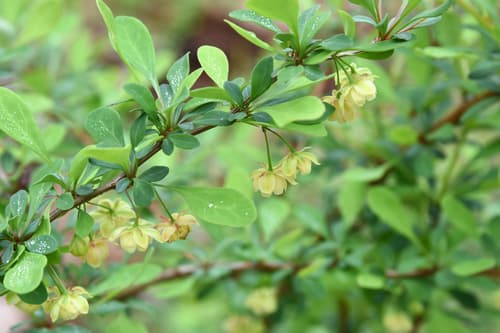
- American barberry (native, rare in NY). American barberry has toothed leaves and three-pronged spines; Japanese barberry leaves are smooth-edged with single spines.
How to identify it
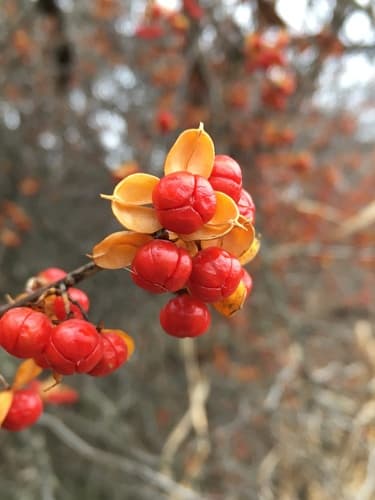
Dense, thorny shrub with small spoon-shaped leaves (green, red, or purple), single spines at each node, and bright red oblong berries that hang on through winter.
What to do
Dig or pull with a weed wrench; roots are shallow. Wear thick gloves. Replace with a native shrub that offers the same fall color.
On Long Island
Fills the understory of North Shore estate woodlands and preserves. If you own woods with barberry, removing it is a tick-control measure as much as a conservation one.
Worth knowing
- New York prohibited sale in 2015; some nurseries still sell sterile cultivars, which are not sterile enough.
- Its bright red berries hang on all winter, feeding birds junk food that spreads it further.
- Cutting barberry stands back has been shown to cut tick numbers by more than half within a year.