Who it feeds
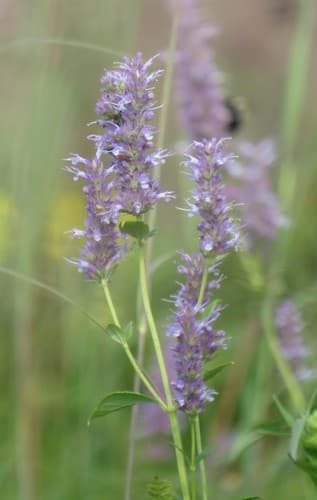
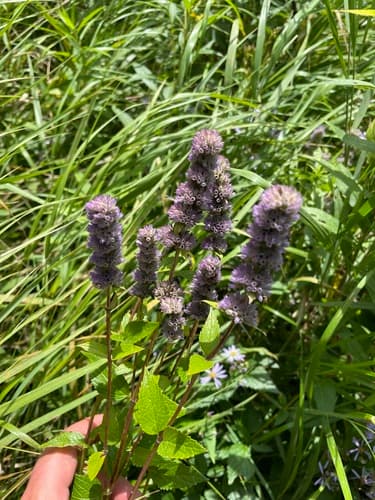
Honey bees, bumble bees, and small native bees mob it from July to frost, and it is among the top honey plants; goldfinches eat the seed in fall.
What it does for the place
An easy, drought-tolerant, deer-resistant nectar source that blooms for three months and self-sows gently.
The story
A prairie native of the upper Midwest, adopted into eastern gardens for its licorice scent and months of bloom. Plains tribes used it as a sweetener, a tea, and a cough medicine. It has become one of the most popular native perennials in the trade.
Worth knowing
- The leaves make a genuinely good tea.
- It is not native to Long Island but to the Midwest; it is a good neighbor here, not an invader.
- Beekeepers estimate an acre can produce hundreds of pounds of honey.
Saving its seed
Ripe: Sep, Oct. Spikes dry; tiny dark seed falls when rubbed.
Collect: Rub spikes over a bowl; sift.
Sow: No pretreatment needed; sow in spring after frost or in fall. Surface sow; needs light.
Seed saving calendar for your zip code →