Who it feeds
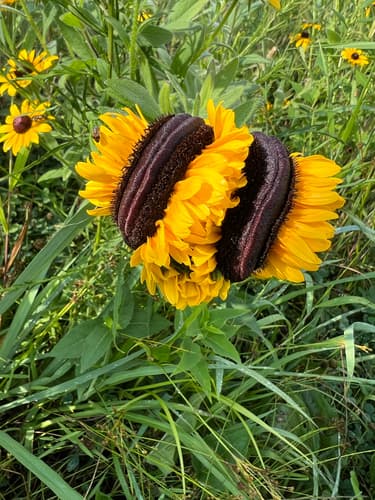
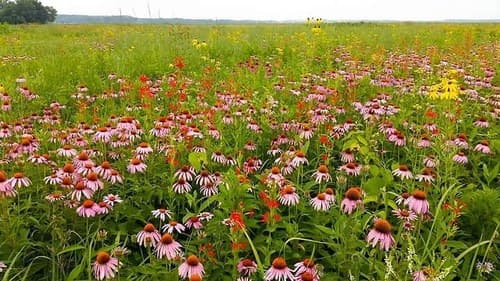
Bumble bees, sweat bees, and butterflies work the disk florets all summer; silvery checkerspot caterpillars eat the leaves. From September to March the seed heads are goldfinch feeders, and the standing stems shelter overwintering insects.
Host plant for: Silvery checkerspot.
What it does for the place
A long-lived, drought-tolerant perennial that provides three months of nectar and six months of seed. Straight-species plants are the ones that do this; double-flowered cultivars have traded the nectar for petals.
The story
Plains tribes used Echinacea for more than any other plant: toothache, snakebite, burns, coughs. It became one of the most-sold herbal remedies in the world, and Echinacea purpurea is grown commercially by the acre. Its garden career took off in the 1990s, and it is now one of the most recognizable American wildflowers.
Worth knowing
- Each cone holds 200 to 300 seeds, each one a separate fruit.
- Bees see a bullseye pattern in ultraviolet on the petals that we cannot.
- It is not native to Long Island proper, but to nearby regions, and has naturalized here; it belongs in any Northeast garden.
Saving its seed
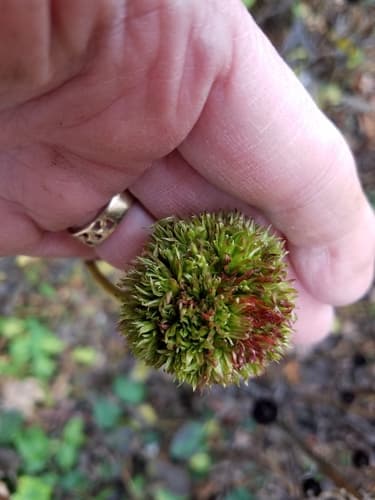
Ripe: Sep, Oct, Nov. Cone turns black and spiny; seeds are tan, wedge-shaped, and hard when pinched.
Collect: Snip dry cones, crush in a bag with gloves (spines), winnow chaff. Leave half for the goldfinches.
Sow: Winter-sow outdoors (jugs or flats) any time after the first hard freeze. Needs about 30 days of cold-moist stratification.
Seed saving calendar for your zip code →