Who it feeds
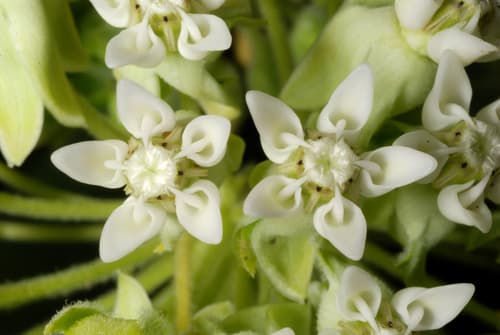
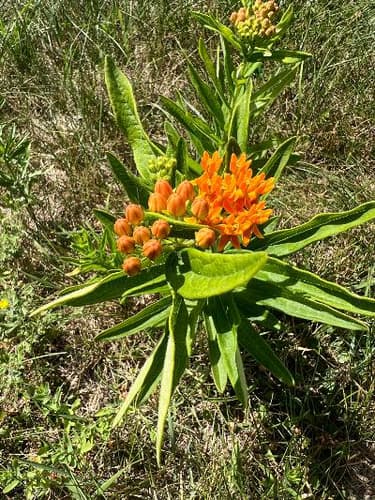
Monarchs often prefer it for egg-laying because its leaves are more tender than common milkweed. The flowers draw swallowtails, fritillaries, skippers, and a crowd of bees, and the seed floss lines hummingbird and goldfinch nests.
Host plant for: Monarch.
What it does for the place
A rain-garden anchor that tolerates standing water for days and holds wet soil with a dense root crown. Unlike common milkweed it stays in a clump, so it fits a small garden.
The story
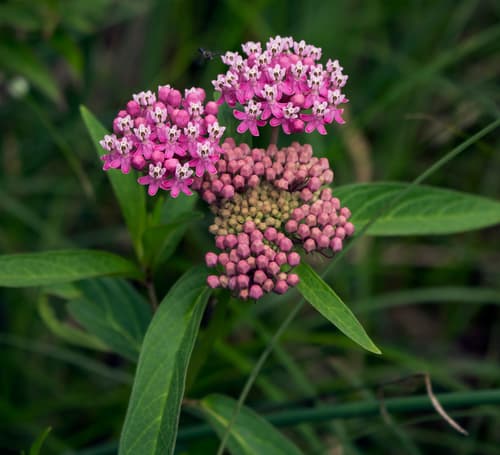
Also called rose milkweed for its clean pink color, it was named incarnata, flesh-colored, by Linnaeus in 1753. The Chippewa used the root medicinally, and the tough stem fibers were twisted into cordage.
Worth knowing
- The vanilla-like fragrance is strongest in the evening.
- Clumps live 10 to 20 years without division.
- It grows happily in ordinary garden soil, not just swamps, as long as it is not bone dry.
Saving its seed
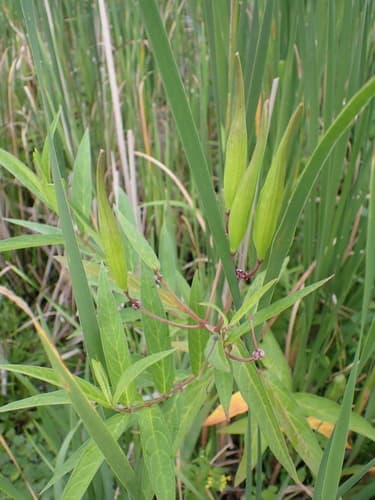
Ripe: Sep, Oct. Slender pods brown and split; seeds brown.
Collect: Same as common milkweed. Clean floss off before storing.
Sow: Winter-sow outdoors (jugs or flats) any time after the first hard freeze. Needs about 30 days of cold-moist stratification.
Seed saving calendar for your zip code →
Plant it instead of
- Purple loosestrife: Takes over wetlands, replacing cattails and sedges that waterfowl and amphibians depend on. A single plant can shed two million seeds.
- Pale swallow-wort: Like black swallow-wort, a deadly decoy for monarch eggs and an aggressive meadow invader.
- Tropical milkweed: Sold as monarch food, but in the Northeast it can disrupt migration cues and lets the debilitating parasite OE build up on the leaves. Native milkweeds do the job without the risk.