Who it feeds
Monarch and queen caterpillars eat it; adults of nearly every butterfly in the meadow nectar on it, along with bumble bees, leafcutter bees, and beetles. Goldfinches take the floss for nests.
Host plant for: Monarch, queen.
What it does for the place
The dry-soil milkweed: its taproot reaches deep into sandy Long Island soil and asks for no water once established. It thrives in the hottest, poorest spot in the yard.
The story
Its old name was pleurisy root: settlers and Indigenous healers used the root for lung complaints, and it was in the U.S. Pharmacopoeia into the 1900s. It was the Perennial Plant of the Year in 2017, a rare honor for a native wildflower.
Worth knowing
- The sap is clear, not milky, unlike other milkweeds.
- It is slow to emerge in spring, often not until late May; mark it so you do not dig it up.
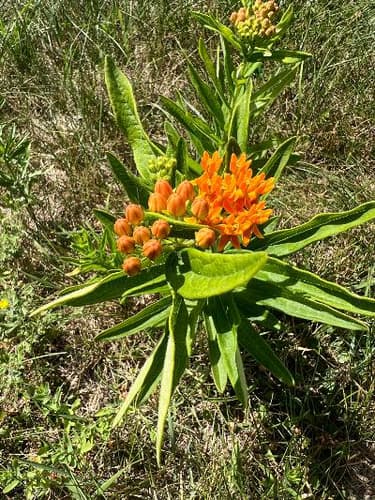
- Flowers are usually orange but yellow and red forms occur in the wild.
Saving its seed
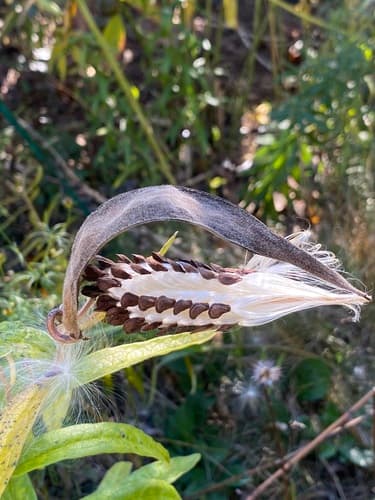
Ripe: Aug, Sep. Upright pods turn tan and crack at the seam.
Collect: Bag pods with mesh or organza a week early; they open fast on hot days.
Sow: Winter-sow outdoors (jugs or flats) any time after the first hard freeze. Needs about 30 days of cold-moist stratification. Taproot: transplant seedlings young or sow where they will grow.
Seed saving calendar for your zip code →
Plant it instead of
- Black swallow-wort: A milkweed relative that monarchs mistake for milkweed; caterpillars that hatch on it die. It also forms dense mats that smother meadows.
- Pale swallow-wort: Like black swallow-wort, a deadly decoy for monarch eggs and an aggressive meadow invader.
- Tropical milkweed: Sold as monarch food, but in the Northeast it can disrupt migration cues and lets the debilitating parasite OE build up on the leaves. Native milkweeds do the job without the risk.