Who it feeds
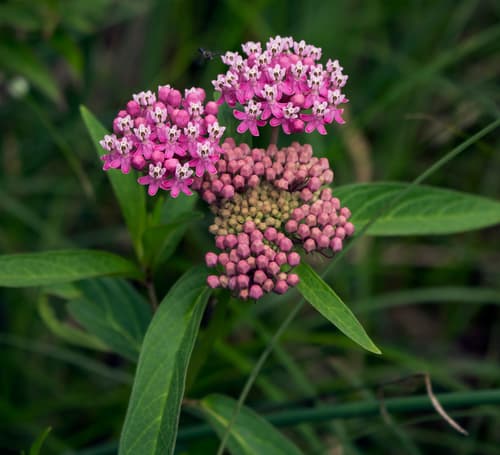
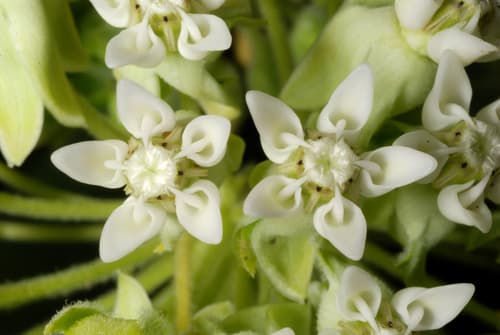
The monarch is the famous one, but common milkweed is a whole community: milkweed tussock moth caterpillars, red milkweed beetles, large and small milkweed bugs, milkweed leaf beetles, and the oleander aphids that feed ladybugs and lacewings. The intensely fragrant June flowers are visited by more than 450 insect species, including bumble bees, honey bees, swallowtails, fritillaries, and hummingbird moths.
Host plant for: Monarch, milkweed tussock moth.
What it does for the place
A deep-rooted colonizer of disturbed ground that holds soil, rebuilds fertility in poor sites, and provides both host plant and nectar bar in one. A patch in a sunny corner is the single most productive pollinator planting per square foot on Long Island.
The story
Named for its milky latex sap, milkweed was a staple of Indigenous medicine and fiber; the Omaha, Menominee, and others cooked the young shoots, buds, and pods. During World War II, schoolchildren across the Northeast collected 11 million pounds of milkweed floss to stuff life jackets after the Japanese cut off the supply of kapok. Two bags of pods filled one jacket.
Worth knowing
- The floss is six times more buoyant than cork and warmer than goose down; it is still used in some hypoallergenic pillows.
- Milkweed flowers trap insect legs in slits to attach pollen sacs; small bees sometimes get stuck.
- A single plant can support monarch eggs for several caterpillars, but a good patch is 10 or more stems.
Saving its seed
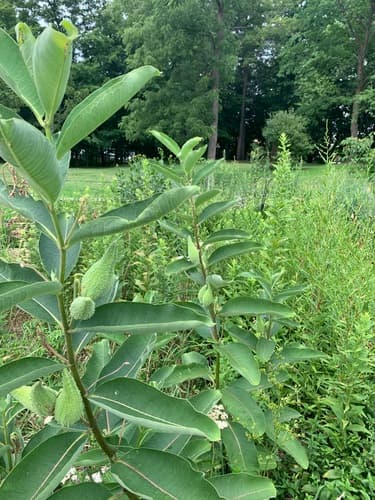
Ripe: Sep, Oct. Pods turn gray-brown, feel soft, and split along the seam; seeds inside are brown, not white.
Collect: Pick pods just as the seam opens. Hold the floss end, strip seeds off with a thumbnail, or shake pods in a paper bag with a coin. Store dry and cool.
Sow: Winter-sow outdoors (jugs or flats) any time after the first hard freeze. Needs about 30 days of cold-moist stratification. Milkweed seed needs a cold period; winter sowing is nearly foolproof.
Seed saving calendar for your zip code →
Plant it instead of
- Black swallow-wort: A milkweed relative that monarchs mistake for milkweed; caterpillars that hatch on it die. It also forms dense mats that smother meadows.
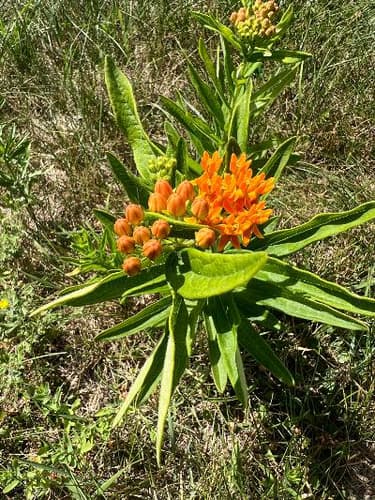
- Tropical milkweed: Sold as monarch food, but in the Northeast it can disrupt migration cues and lets the debilitating parasite OE build up on the leaves. Native milkweeds do the job without the risk.