Who it feeds
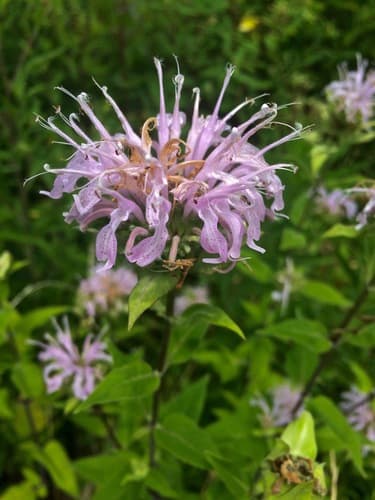
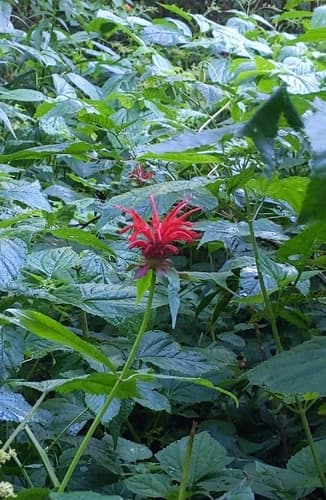
The top hummingbird plant in Northeast gardens: the tubular scarlet flowers are shaped for their bills. Bumble bees, hummingbird clearwing moths, and swallowtails also work it, and a specialist bee, Dufourea monardae, collects only Monarda pollen.
What it does for the place
A fast-spreading mint-family perennial for damp, rich soil that fills space quickly and feeds birds and long-tongued insects in the high-summer gap between coneflower and goldenrod.
The story
The Oswego people brewed its leaves as tea and taught the practice to colonists, who drank Oswego tea in place of taxed British tea after the Boston Tea Party. Its flavor is the origin of the bergamot-like note, and the plant is named for Nicolás Monardes, a Spanish physician who wrote the first book on New World medicinal plants in 1574.
Worth knowing
- The leaves contain thymol, the antiseptic in mouthwash.
- Ruby-throated hummingbirds will defend a good bee balm patch against all comers.
- Powdery mildew is cosmetic; the plant shrugs it off, and resistant selections exist.
Saving its seed
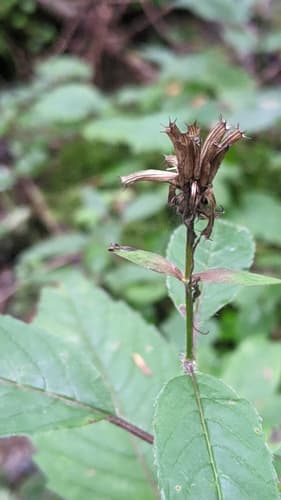
Ripe: Sep, Oct. Round seed heads dry and brown; tiny seeds fall when tapped.
Collect: Invert heads into a bag and shake. Sift through a fine strainer.
Sow: Winter-sow outdoors (jugs or flats) any time after the first hard freeze. Needs about 30 days of cold-moist stratification. Surface sow; needs light.
Seed saving calendar for your zip code →