Who it feeds
The early flowers are a lifeline for emerging bumble bee queens, mason bees, and leafcutter bees, which cut its round leaves for nest lining; Henry's elfin butterfly caterpillars eat the buds and pods.
Host plant for: Henry's elfin.
What it does for the place
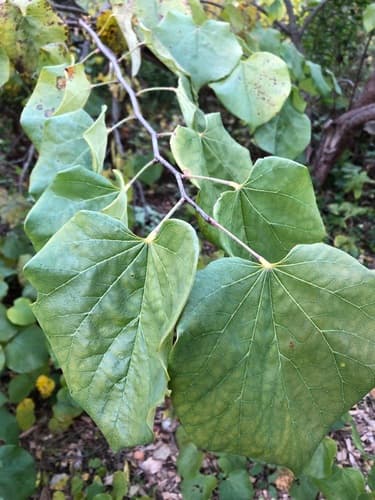
A legume that fixes nitrogen, tolerates shade, and provides spring nectar and heart-shaped summer shade in small spaces.
The story
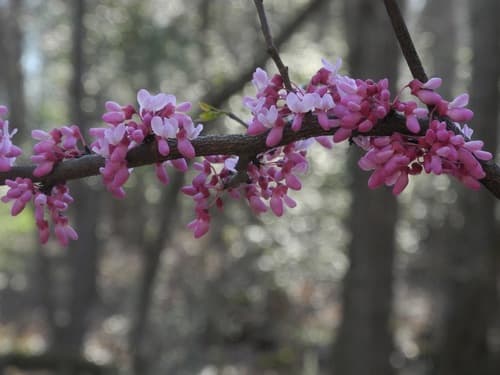
A small tree of eastern woodland edges whose magenta flowers grow straight out of bare branches and even the trunk in April. George Washington transplanted redbuds from the woods to Mount Vernon. The flowers are edible and were pickled by early settlers.
Worth knowing
- Flowers sprouting from the trunk are called cauliflory, common in the tropics and rare here.
- The heart-shaped leaves turn yellow in fall.
- Seedpods hang on into winter and feed birds.
Saving its seed
Ripe: Oct, Nov. Flat brown pods hang on the branches into winter.
Collect: Pick pods, split, and shell the hard flat seeds.
Sow: Cold-moist stratify in the fridge, then sow in spring. Needs about 60 days of cold-moist stratification. Pour just-boiled water over seed and soak overnight to soften the coat before stratifying.
Seed saving calendar for your zip code →
Plant it instead of
- Callery (Bradford) pear: Cultivars planted by the millions cross-pollinate and produce fertile fruit; thorny wild offspring now fill roadsides and old fields across the Mid-Atlantic. Banned in several neighboring states.