Who it feeds
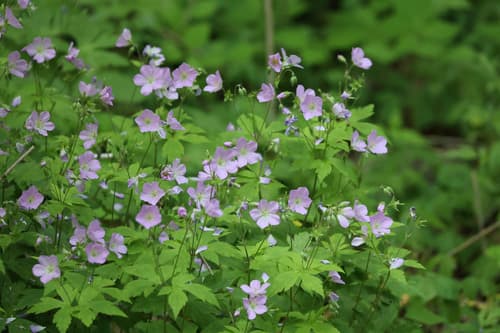
Mining bees, mason bees, and bumble bee queens rely on its May bloom; it hosts several moth species; and chipmunks and birds eat the seeds it flings.
What it does for the place
A woodland ground layer plant that fills the gap between spring ephemerals and summer, and holds slope soil with a thick rhizome mat.
The story
The spring geranium of eastern woodlands, called cranesbill for its beaked seed capsule. It was used by the Iroquois and others as an astringent for wounds and sore throats, and its tannin-rich root was in early American pharmacopoeias.
Worth knowing
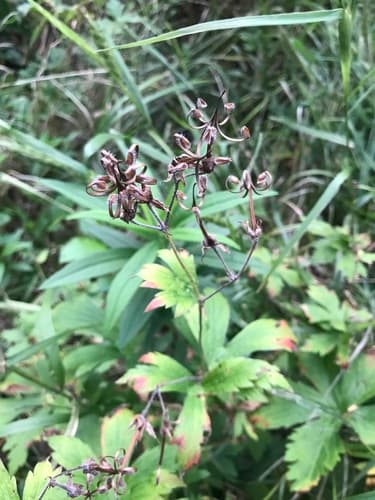
- The seed capsule springs open and hurls seeds up to 30 feet.
- Leaves turn red in fall.
- It is unrelated to the tender bedding geraniums, which are Pelargonium from South Africa.
Saving its seed
Ripe: Jun, Jul. Crane's-bill capsules turn brown, then fling seed several feet.
Collect: Bag developing capsules with organza a week ahead or you will get nothing.
Sow: Direct sow outdoors in fall; winter does the stratifying. Needs about 60 days of cold-moist stratification.
Seed saving calendar for your zip code →