Who it feeds
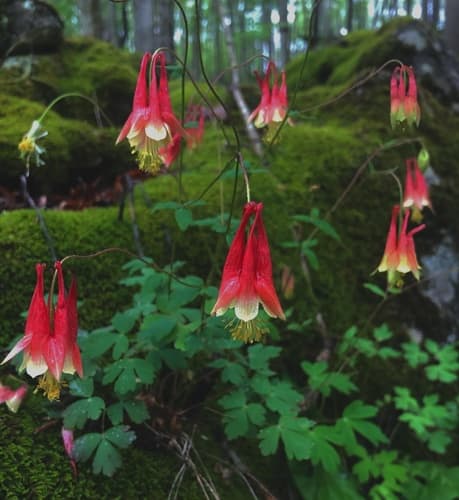
Its April bloom is timed to the return of ruby-throated hummingbirds, which are its main pollinators. Long-tongued bumble bees also visit, and the columbine duskywing skipper eats only columbine.
Host plant for: Columbine duskywing.
What it does for the place
A spring nectar source for rocky, shady, thin-soiled places where little else blooms, and a self-sowing colonizer of walls and ledges.
The story
The only columbine native to the East, and one of the first North American plants grown in Europe, sent from Virginia by 1640. The name comes from columba, dove, because the flower's spurs looked like a ring of doves. Several tribes used the crushed seeds as a perfume and love charm.
Worth knowing
- The nectar is hidden at the tip of the spurs; bees sometimes cheat by biting through.
- Leaf miners draw squiggly lines in the leaves; harmless, and food for tiny wasps.
- Seedlings appear in gravel and cracks and should be welcomed.
Saving its seed
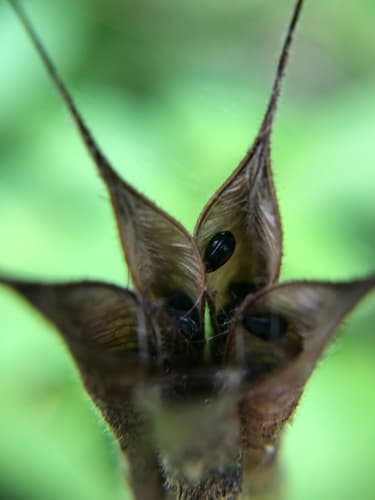
Ripe: Jun, Jul. Upright capsules split at the top; shiny black seed pours out.
Collect: Tip capsules into an envelope. Sow soon; fresh seed germinates best.
Sow: Sow fresh, right after collecting; seed loses viability if it dries. Needs about 30 days of cold-moist stratification. Surface sow; needs light. Scatter where you want it in July and let it self-sow after that.
Seed saving calendar for your zip code →