Who it feeds
Bees and butterflies through a three-month bloom; caterpillars of several moths; goldfinch seed in fall.
What it does for the place
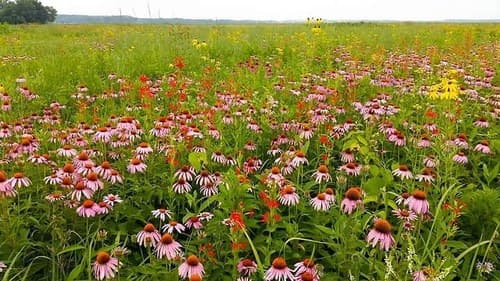
One of the longest-blooming native daisies, filling summer and early fall in meadows and tough sites.
The story
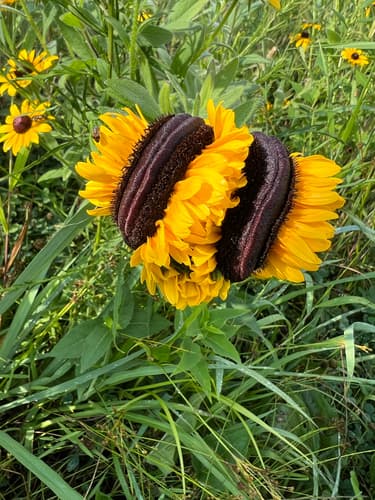
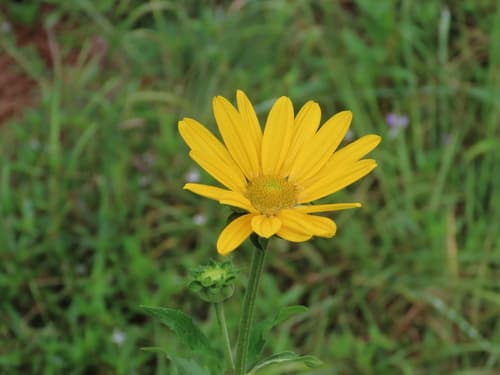
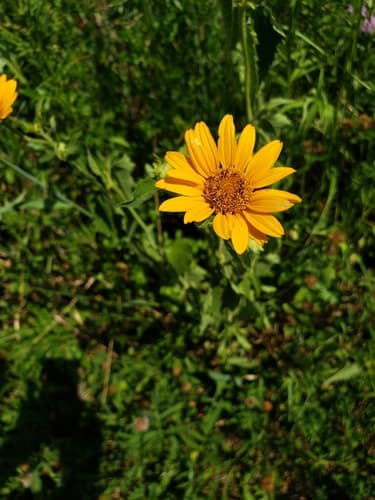
Also called oxeye, it looks like a sunflower but keeps its ray petals fertile, which true sunflowers do not; hence false. It has been a meadow staple across the eastern United States since the prairies were mapped.
Worth knowing
- It starts blooming in June, weeks before most sunflowers.
- Tolerates clay, drought, and neglect.
- Stems are strong and rarely flop.
Saving its seed
Ripe: Sep, Oct. Cones dry and darken; wedge seeds pull free.
Collect: Rub out and winnow.
Sow: No pretreatment needed; sow in spring after frost or in fall.
Seed saving calendar for your zip code →