Who it feeds
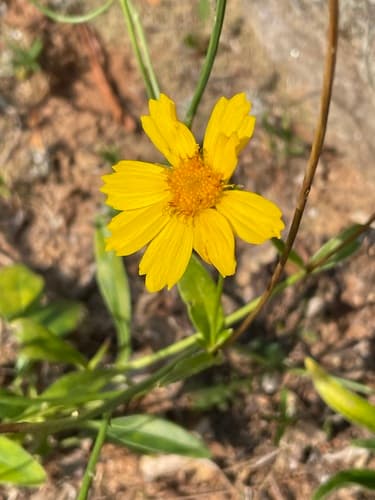
Small bees, hover flies, and butterflies work the yellow daisies in early summer; goldfinches eat the seed.
What it does for the place
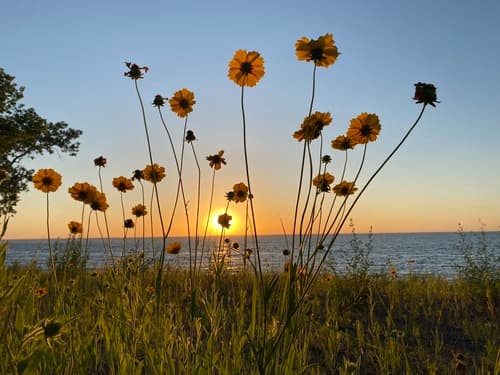
A tough, early-blooming pioneer for sandy, salty, dry sites, including near the shore, where it stabilizes soil and self-sows into gaps.
The story
A sandy-soil native of the East and Midwest; the name coreopsis means bug-like, for the seeds, which gave it the folk name tickseed. It is Florida's state wildflower and was scattered along highways in the 1930s in one of the first native roadside programs.
Worth knowing
- It blooms for two months if deadheaded.
- The petals have a notched, toothed tip.
- It tolerates salt spray, making it a South Shore staple.
Saving its seed
Ripe: Jul, Aug. Heads turn brown; flat, dark, winged seeds rattle out.
Collect: Rub dry heads over a bowl.
Sow: Winter-sow outdoors (jugs or flats) any time after the first hard freeze. Needs about 30 days of cold-moist stratification.
Seed saving calendar for your zip code →