Who it feeds
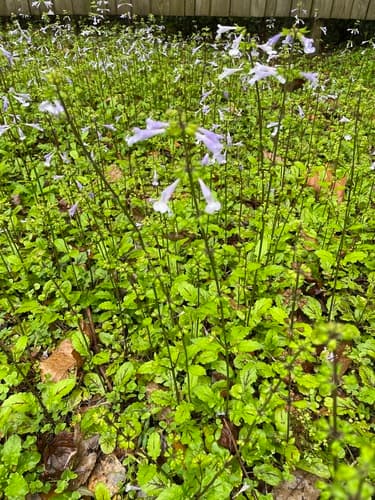
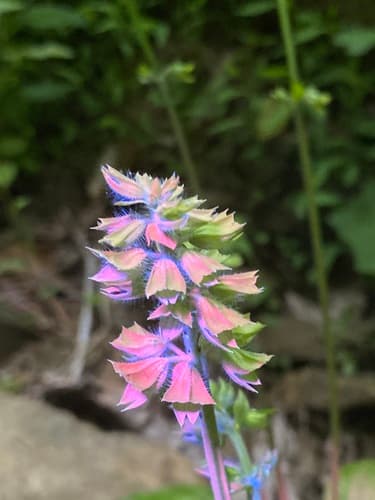
Bumble bees and hummingbirds visit the lavender-blue spring spikes; it hosts several moths.
What it does for the place
A native ground cover that tolerates mowing and foot traffic, useful in meadow lawns and along paths.
The story
A native salvia of the Southeast and Mid-Atlantic, named for its lyre-shaped leaves, which are often purple-veined. It was used as a remedy for colds and as a salve, and its seeds, like chia, make a gel in water.
Worth knowing
- Leaves turn burgundy in winter sun.
- It self-sows into lawns and can be mowed after bloom.
- It is one of the few native salvias in the Northeast.
Saving its seed
Ripe: Jun, Jul. Calyces dry; four nutlets per flower shake out.
Collect: Shake dry spikes into a bag.
Sow: No pretreatment needed; sow in spring after frost or in fall. Surface sow; needs light. Self-sows generously.
Seed saving calendar for your zip code →