Who it feeds
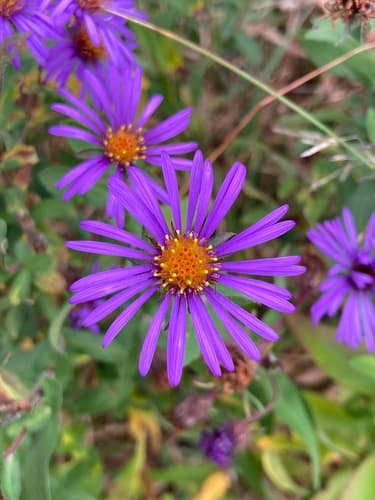
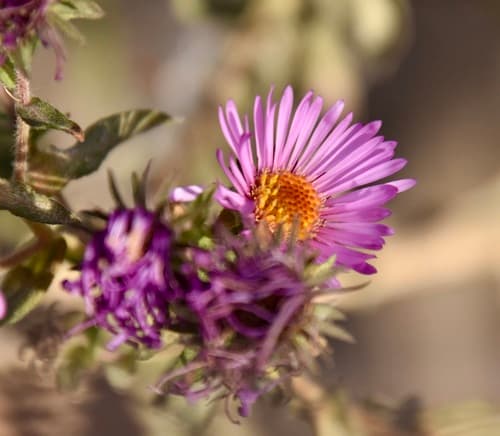
Its purple flowers pair with goldenrod to fuel the monarch migration and feed the last bumble bee queens before they hibernate. Pearl crescent caterpillars eat the leaves, and a dozen specialist bees collect aster pollen.
Host plant for: Pearl crescent.
What it does for the place
Fills the October gap when almost nothing else offers nectar. Its late seed feeds juncos and sparrows into winter.
The story
One of the last flowers to bloom, it has been the emblem of fall in New England since colonial times. The name aster is Greek for star, and it was in the genus Aster until DNA work moved North American species to Symphyotrichum in the 1990s, to the lasting annoyance of gardeners.
Worth knowing
- Cut it back by half in early June and it will be bushier and half as tall.
- Flowers close at night and in rain, protecting the pollen.
- Colors range from deep purple to pink to nearly white in wild populations.
Saving its seed
Ripe: Oct, Nov. Flower heads become fluffy tan puffs.
Collect: Pinch puffs into a bag; no cleaning needed.
Sow: Winter-sow outdoors (jugs or flats) any time after the first hard freeze. Needs about 30 days of cold-moist stratification. Surface sow; needs light.
Seed saving calendar for your zip code →