Who it feeds
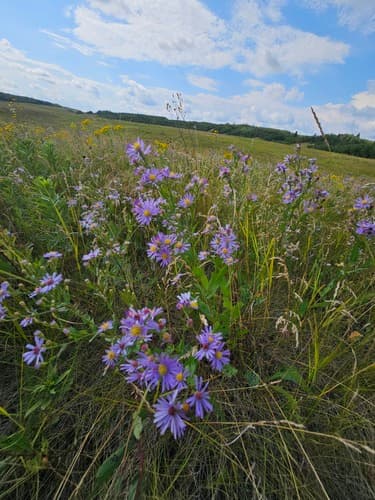
Small bees, hover flies, and late butterflies swarm the sky-blue flowers in October; pearl crescent caterpillars use the foliage.
Host plant for: Pearl crescent.
What it does for the place
One of the best asters for dry, sandy Long Island soil, providing late nectar without the mildew and flopping of larger species.
The story
A prairie and dry-woodland aster with blue-gray, waxy foliage that stays clean all season, which earned it the name laeve, smooth. It was named by Linnaeus from specimens collected in the 1700s.
Worth knowing
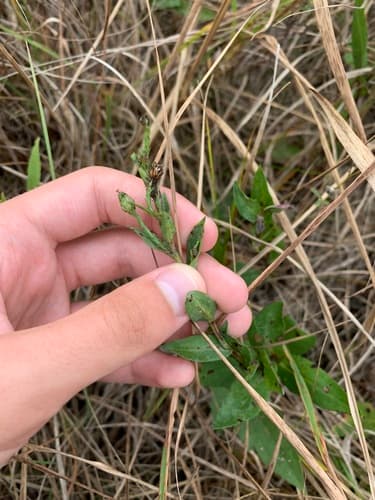
- The leaves clasp the stem and feel almost succulent.
- It is among the last plants in bloom before frost.
- Deer generally skip it.
Saving its seed
Ripe: Oct, Nov. Fluffy puffs on dried heads.
Collect: Same as New England aster.
Sow: Winter-sow outdoors (jugs or flats) any time after the first hard freeze. Needs about 30 days of cold-moist stratification. Surface sow; needs light.
Seed saving calendar for your zip code →