Who it feeds
The rose mallow bee, Ptilothrix bombiformis, collects only hibiscus pollen and nests in hard-packed soil nearby. Hummingbirds visit, and it hosts several moths including the io moth.
What it does for the place
A marsh-edge plant that tolerates salt and flooding, holds tidal banks, and blooms through August when marsh nectar is scarce.
The story
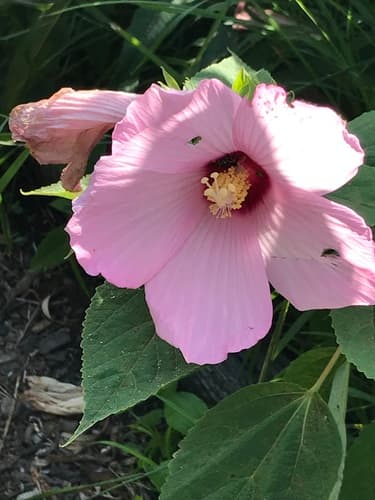
Long Island's native hibiscus, growing in brackish and freshwater marshes along both shores. The dinner-plate flowers of the garden hardy hibiscus were bred from it. Its stem fibers were used for cordage.
Worth knowing
- Each flower lasts a single day, but plants produce dozens.
- It is very late to emerge in spring; do not give up on it before June.
- Seeds float and disperse on tides.
Saving its seed
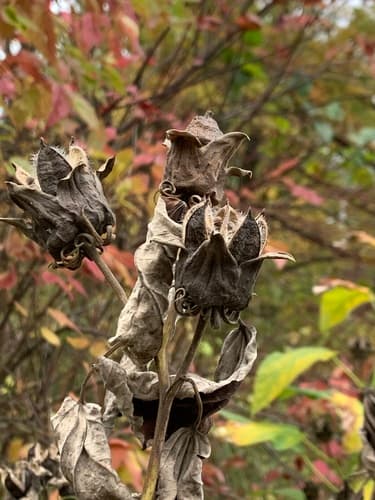
Ripe: Oct, Nov. Round capsules turn brown and split into five parts; seeds are dark and round.
Collect: Pick capsules before they shatter; shake out seed.
Sow: No pretreatment needed; sow in spring after frost or in fall. Soak seed 24 hours in warm water before sowing; nick hard seed coats.
Seed saving calendar for your zip code →