Who it feeds
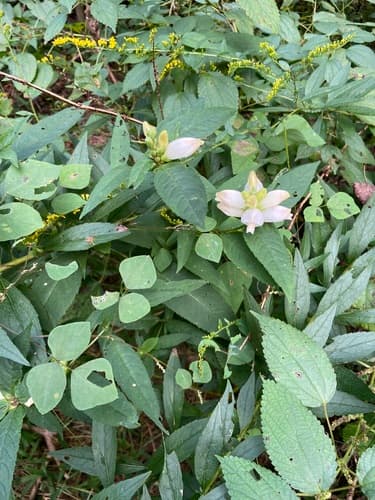
The sole host plant for the Baltimore checkerspot, Maryland's state butterfly, whose caterpillars overwinter in webs on it. Bumble bees force their way into the closed flowers, one of the best sights of late summer.
Host plant for: Baltimore checkerspot.
What it does for the place
A wetland and streambank plant that flowers in the September shade of stream corridors where few other natives bloom.
The story
Named for the flower's resemblance to a turtle's head; the genus Chelone is Greek for tortoise, from a nymph turned into one for skipping Zeus's wedding. Cherokee and other healers used it for worms and skin conditions.
Worth knowing
- Watch a bumble bee disappear entirely inside a flower and back out coated in pollen.
- Deer usually avoid it.
- It grows in ordinary moist garden soil, not just wetlands.
Saving its seed
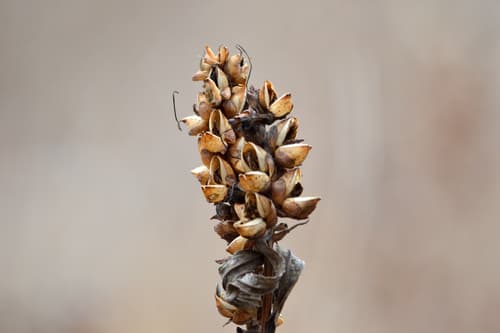
Ripe: Oct, Nov. Capsules brown and split; flat winged seeds.
Collect: Cut spikes, shake out.
Sow: Winter-sow outdoors (jugs or flats) any time after the first hard freeze. Needs about 60 days of cold-moist stratification.
Seed saving calendar for your zip code →