Where it came from
Southwestern Europe, mainly Spain, Portugal, France, and Italy.
How it got here
First collected in Massachusetts in 1854, probably escaped from a botanical garden in Cambridge. It spread quietly along the Northeast coast for a century before anyone noticed it was a problem.
What it does to the ecosystem
It is a milkweed relative, and monarchs sometimes lay eggs on it; every caterpillar that hatches on swallow-wort dies. It also forms dense, twining mats that smother old fields, grassland bird habitat, and rare coastal plant communities, and it is toxic to livestock and deer, so nothing keeps it in check.
What it costs
It threatens grassland restoration projects across the Northeast and complicates monarch conservation in the very meadows planted for them.
Don’t confuse it with
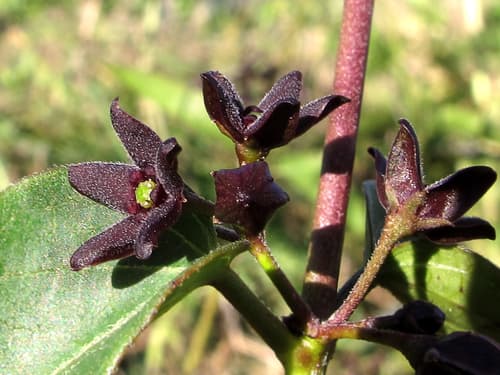
- Milkweeds (native). Milkweeds are upright, not twining, with thick leaves and large pink or orange flower clusters. Swallow-wort vines twine, have small glossy leaves, and tiny dark purple flowers.
How to identify it
Twining vine with opposite, glossy, pointed leaves, tiny dark purple star-shaped flowers in June, and slender milkweed-like pods that release silky seeds in late summer.
What to do
Pull or dig the root crown before pods open; bag pods. Persistent; expect several years. Report it, especially near monarch habitat.
On Long Island
Established in coastal meadows and roadside edges in both counties. Bag pods in August before they open; report it near monarch habitat.
Worth knowing
- A moth from Europe, Hypena opulenta, was approved for release in 2017 as a biological control and is being tested in New York.
- Its seeds fly on silky parachutes like milkweed, and many pods hold twin seeds.
- The name comes from an old belief that swallows used the plant to restore sight to their young.