Where it came from
Europe, western Asia, and North Africa; glossy buckthorn from Europe and western Asia.
How it got here
Common buckthorn was brought over as a hedge plant in the early 1800s and sold for shelterbelts and living fences into the 1930s. Glossy buckthorn was planted for wildlife and windbreaks.
What it does to the ecosystem
Both leaf out early and hold leaves late, casting shade that eliminates the ground layer. Buckthorn litter raises soil nitrogen and favors invasive earthworms. The berries have a laxative effect on birds, which spreads seed faster. Common buckthorn is the overwintering host of soybean aphid; glossy buckthorn hosts oat crown rust.
What it costs
Agricultural losses from the pests it harbors, plus decades of removal work in Midwestern and Northeastern woodlands.
Don’t confuse it with
- Alder-leaved buckthorn and Carolina buckthorn (native). Natives lack the thorn at the twig tip and have finely toothed leaves; common buckthorn leaves have three to five curving veins and sub-opposite arrangement, and glossy buckthorn has smooth, glossy, untoothed leaves.
How to identify it
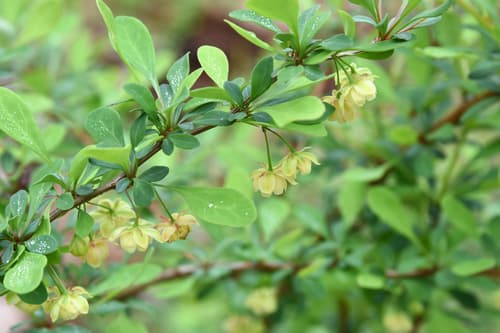
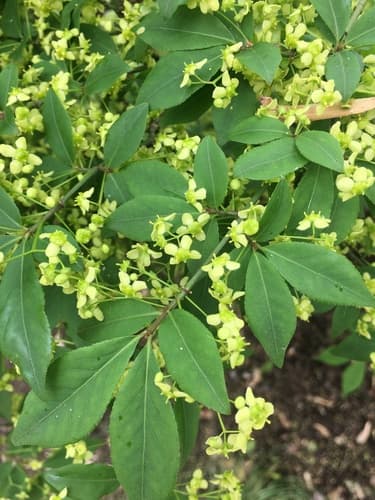
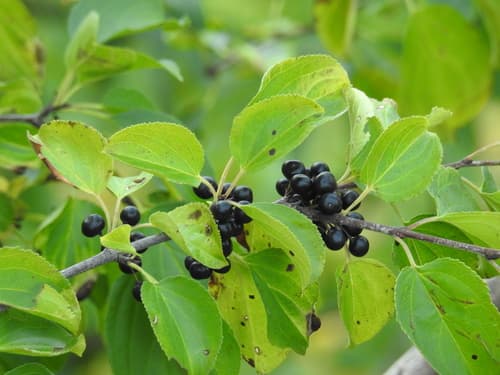
Small trees with dark bark, sometimes a thorn at the twig tip, glossy leaves that stay green late into fall, and clusters of black berries.
What to do
Pull small plants; cut and treat stumps of large ones. Prioritize female (fruiting) plants.
On Long Island
Scattered in North Shore woodlands and wet thickets. Cut and treat stumps; pull seedlings.
Worth knowing
- The berries were once the source of a yellow-green dye called sap green used by medieval illuminators.
- Female plants can be spotted in fall by their heavy black berry clusters; prioritize those.
- New York prohibited sale of both species in 2015.