Who it feeds
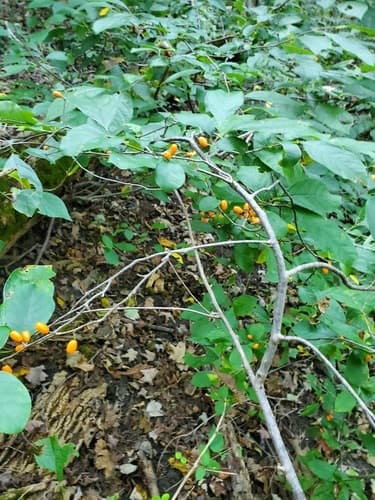
The spicebush swallowtail caterpillar, which mimics a snake with its false eyespots, eats only spicebush and sassafras. The promethea moth uses it too. Its fat-rich red berries fuel thrushes, catbirds, and vireos on fall migration.
Host plant for: Spicebush swallowtail, promethea moth.
What it does for the place
A shade-tolerant native shrub that replaces invasive honeysuckle and barberry in the understory and provides the earliest woodland nectar.
The story
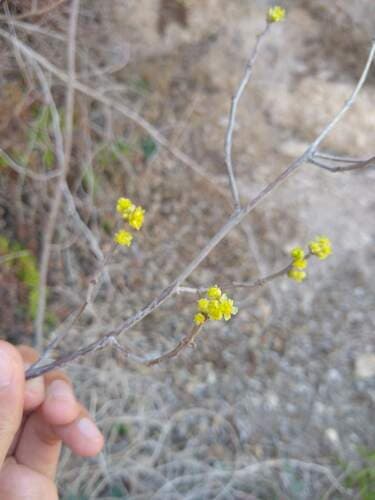
The understory shrub of rich eastern woods, whose twigs and berries smell of allspice. Colonists used the dried berries as a spice and the twigs as tea, and it was called wild allspice and Benjamin bush. Its flowering marks the true start of spring in the North Shore woods.
Worth knowing
- Scratch a twig and smell it; the scent is unmistakable.
- Male plants have showier flowers; females bear the berries.
- Fall color is a clear yellow that lights up shady woods.
Saving its seed
Ripe: Sep, Oct. Drupes glossy red.
Collect: Clean pulp promptly and sow the same week; seed dies if it dries out.
Sow: Sow fresh, right after collecting; seed loses viability if it dries. Needs about 120 days of cold-moist stratification. Sow outdoors in fall in a protected flat; germinates the following spring.
Seed saving calendar for your zip code →
Plant it instead of
- Bush honeysuckles (Amur, Morrow's, Tatarian): Leaf out early and drop late, shading out spring wildflowers; their berries are junk food for migrating birds.
- Common and glossy buckthorn: Thicket-forming shrubs that shade out natives and whose laxative berries help birds spread them; alternate host of soybean aphid and oat rust.