Where it came from
Japan, China, Korea, India, and Malaysia.
How it got here
First found in Tennessee in 1919. It was used as packing material for porcelain shipped from China, and dried stiltgrass spilled from crates took root wherever the china was unpacked.
What it does to the ecosystem
An annual grass that tolerates deep shade, it carpets forest floors and suppresses tree seedlings and wildflowers. Its thatch changes soil chemistry and favors more stiltgrass. Deer avoid it, so it wins wherever deer are heavy. Each plant drops hundreds of seeds that persist several years.
What it costs
It has become the dominant ground cover in many Northeastern forests, changing forest regeneration for a generation. Trail maintenance and restoration plantings both fight it constantly.
Don’t confuse it with
- Whitegrass (native). Whitegrass is a perennial that stays green longer and lacks the silvery stripe of hairs down the leaf midrib.
- Smartweeds. Smartweeds have swollen nodes with papery sheaths and are not grasses.
How to identify it
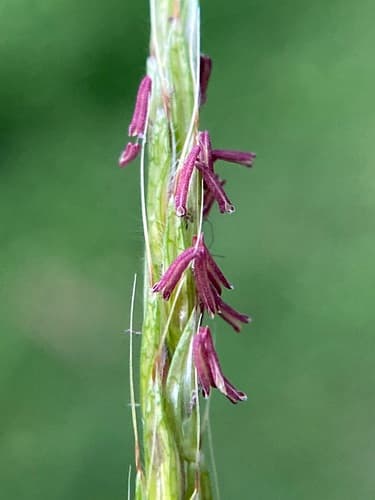
Sprawling, delicate grass 1 to 3 ft tall with pale green leaves that have a silvery stripe of hairs down the midrib. Turns tan and dies with the first frost.
What to do
Pull or string-trim in late August before seed set; it is shallow-rooted. Do not mow earlier, or it reseeds low. Leave the seed bank to exhaust over several years.
On Long Island
Spreading along trails, road edges, and shady lawns across both counties, especially where deer are dense. Pull or trim in late August, not before.
Worth knowing
- It is called stiltgrass because the stems prop themselves up on tiny stilt-like roots at the lower nodes.
- It dies with the first frost and turns the forest floor a distinctive tan.
- Mowing before seed set in late August works because it is an annual; mowing earlier makes it seed low to the ground.