Where it came from
Europe, western Asia, and northwest Africa.
How it got here
Introduced as an ornamental for ponds and water gardens in the late 1800s and also planted in sewage treatment lagoons because it takes up nutrients and metals. Escaped from garden ponds into natural wetlands.
What it does to the ecosystem
Its rhizome mats spread outward from pond edges and stream banks, crowding out native sedges, cattails, and blue flag iris, trapping sediment, and narrowing channels. It tolerates salt, so it invades brackish marsh edges too.
What it costs
Wetland managers on Long Island and across the Northeast spend effort removing it from pond restorations. All parts are toxic to livestock, and the sap irritates skin.
Don’t confuse it with
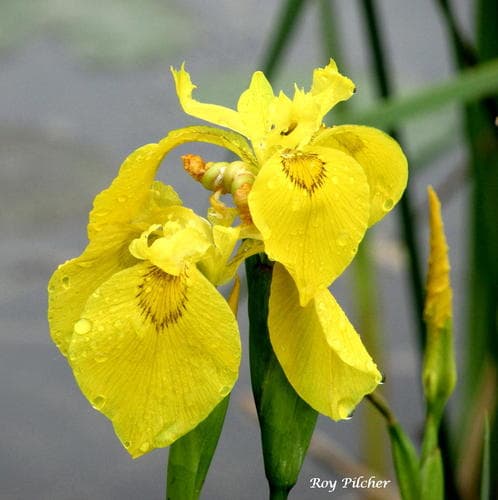
- Northern blue flag (native). Blue flag has violet-blue flowers. Yellow flag is the only tall yellow-flowered iris in New York wetlands.
How to identify it
The only large yellow-flowered iris in New York wetlands; sword-like leaves to 4 ft, blooming in May and June.
What to do
Dig rhizomes wearing gloves (the sap irritates skin). Bag and trash. Replace with the native blue flag.
On Long Island
Around many freshwater ponds, including park ponds in Nassau County, and in some brackish marsh edges. Dig rhizomes wearing gloves.
Worth knowing
- It is the fleur-de-lis of French heraldry and the flag in the name refers to the reedy plant, not a banner.
- Seeds float and stay viable in water for months.
- It has been used to remove heavy metals from wastewater, which is why treatment plants planted it.