Who it feeds
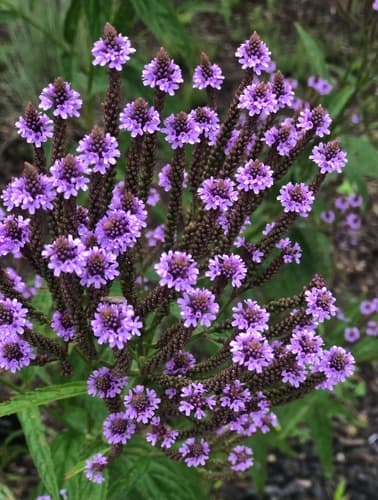
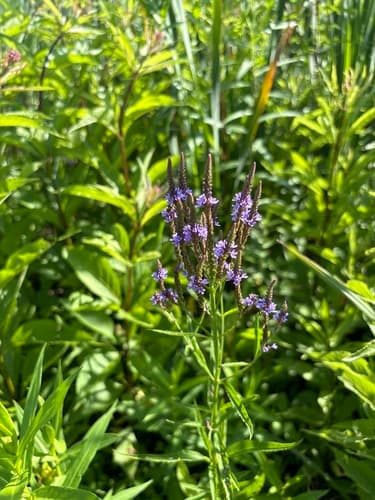
Small bees and specialist verbena bees work the tiny flowers as they open in rings up the spikes over many weeks; it hosts the common buckeye butterfly; sparrows and juncos eat the seed.
Host plant for: Common buckeye.
What it does for the place
The native answer to purple loosestrife in wet meadows: tall, violet-blue, and beneficial, thriving in the same damp ground.
The story
A wet-meadow native used by many tribes and early settlers as a tonic and fever remedy; vervain was sacred to the Romans and the Druids, and the American species inherited the folklore.
Worth knowing
- Flowers open a few at a time in a ring that moves up the spike.
- It self-sows freely in damp soil.
- The seeds are a favorite of cardinals and sparrows.
Saving its seed
Ripe: Sep, Oct. Spikes turn brown; small nutlets rub free.
Collect: Strip spikes into a bag.
Sow: Winter-sow outdoors (jugs or flats) any time after the first hard freeze. Needs about 30 days of cold-moist stratification. Surface sow; needs light.
Seed saving calendar for your zip code →
Plant it instead of
- Purple loosestrife: Takes over wetlands, replacing cattails and sedges that waterfowl and amphibians depend on. A single plant can shed two million seeds.
- Yellow flag iris: A garden pond escapee that forms dense rhizome mats along pond edges and streams, displacing native wetland plants. All parts are toxic.