Who it feeds
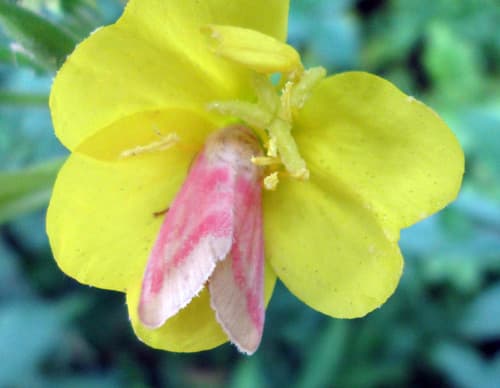
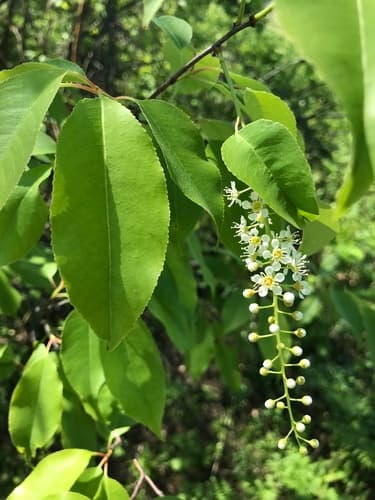
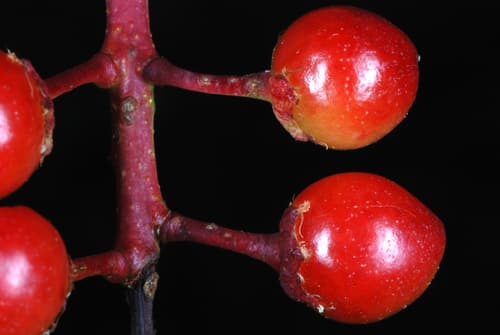
A keystone tree hosting more than 400 caterpillar species, including eastern tiger swallowtails, red-spotted purples, and giant silk moths like the cecropia. Its May flowers feed bees; its August fruit feeds more than 30 bird species and the foxes and raccoons that spread its pits.
Host plant for: Eastern tiger swallowtail, red-spotted purple, cecropia moth.
What it does for the place
A fast-growing pioneer that reforests old fields, feeds birds and insects at every stage, and replaces tree-of-heaven in the same disturbed sites.
The story
The largest native cherry and one of the most valuable furniture woods in North America; 18th-century cabinetmakers called it New England mahogany. The bark's wild cherry flavor was the base of cough syrups and of the cherry in early sodas.
Worth knowing
- The bark on young trees has horizontal lines and smells of almonds; mature bark looks like burnt potato chips.
- Wilted leaves are toxic to livestock, but fresh leaves and ripe fruit are fine.
- Tent caterpillars love it, and so do the cuckoos that eat tent caterpillars.
Saving its seed
Ripe: Aug, Sep. Cherries turn black and soft.
Collect: Clean pulp off in water; dry pits briefly.
Sow: Direct sow outdoors in fall; winter does the stratifying. Needs about 120 days of cold-moist stratification. Sow outdoors in fall; protect from rodents.
Seed saving calendar for your zip code →
Plant it instead of
- Tree-of-heaven: Grows anywhere, spreads by root suckers and huge seed crops, releases chemicals that suppress other plants, and is the preferred host of the spotted lanternfly.