Who it feeds
Monarchs, swallowtails, and fritillaries cover it in August, and it is one of the best plants for attracting butterflies to a small garden. Bumble bees and skippers work it too, and goldfinches eat the seed.
What it does for the place
Upright, narrow, and long-blooming, it supplies concentrated nectar in the late-summer gap and fits between other plants without crowding them.
The story
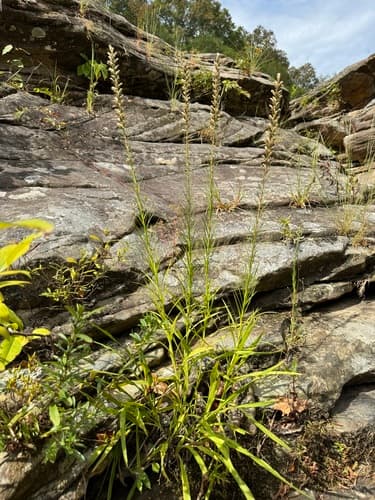
A wet-meadow native from New York south, whose purple bottlebrush spikes open from the top down, the reverse of most flowers. The corms were used by several tribes for sore throats and as a diuretic.
Worth knowing
- The corms are a favorite of voles; plant with a handful of gravel.
- It is the blazing star sold as cut flowers in florists' shops.
- Deer sometimes nibble it, but it recovers.
Saving its seed
Ripe: Oct, Nov. Spikes turn fluffy tan from the top down.
Collect: Strip fluff downward into a bag.
Sow: Winter-sow outdoors (jugs or flats) any time after the first hard freeze. Needs about 60 days of cold-moist stratification.
Seed saving calendar for your zip code →
Plant it instead of
- Purple loosestrife: Takes over wetlands, replacing cattails and sedges that waterfowl and amphibians depend on. A single plant can shed two million seeds.