Who it feeds
Small native bees and hover flies work the April flowers; the foliage shelters ground beetles and salamanders.
What it does for the place
An evergreen, spreading, deer-resistant native replacement for English ivy and pachysandra that suppresses weeds without smothering spring ephemerals.
The story
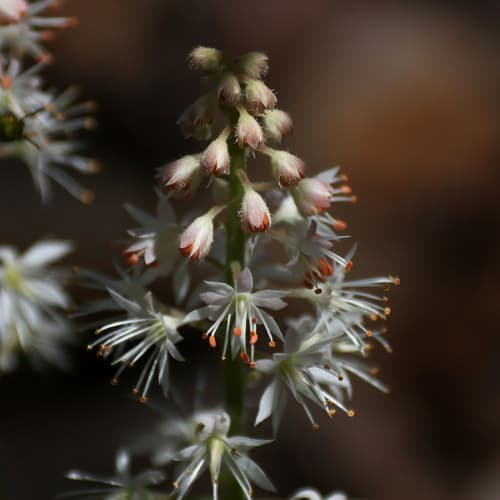
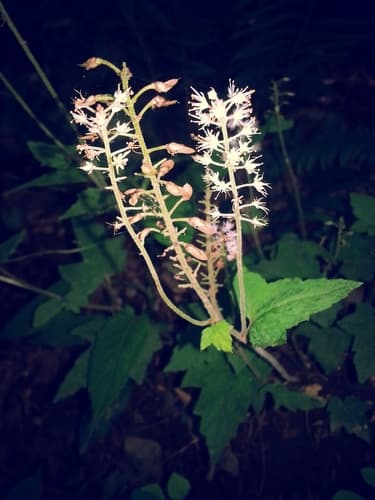
A woodland ground cover of the Appalachians and Northeast, named for its foamy white spring spikes. The genus name Tiarella means little tiara, for the shape of the seed capsule.
Worth knowing
- The leaves are maple-shaped and often marbled with maroon.
- It spreads by runners and can be divided endlessly.
- Pairs well with Christmas fern and wild ginger under trees.
Saving its seed
Ripe: Jun, Jul. Tiny capsules after the spring spikes.
Collect: Dust-fine seed; tricky.
Sow: Rarely grown from seed; divide or take cuttings instead. Needs about 30 days of cold-moist stratification. Divide runners in spring or fall instead.
Seed saving calendar for your zip code →
Plant it instead of
- Garlic mustard: Carpets the forest floor, poisons the soil fungi that native tree seedlings need, and tricks native white butterflies into laying eggs on it, where the caterpillars die.