Who it feeds
Long-tongued bumble bees, hummingbird moths, and butterflies crowd it in July; hummingbirds visit; two specialist bees depend on it; and the seed heads feed sparrows in winter.
What it does for the place
Tougher and more drought tolerant than scarlet bee balm, it anchors dry meadows and holds its own against aggressive neighbors, making it a reliable core plant for a mowed-once-a-year meadow.
The story
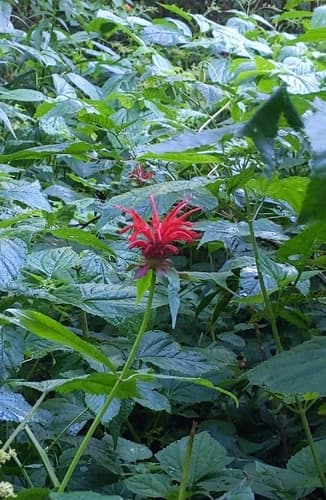
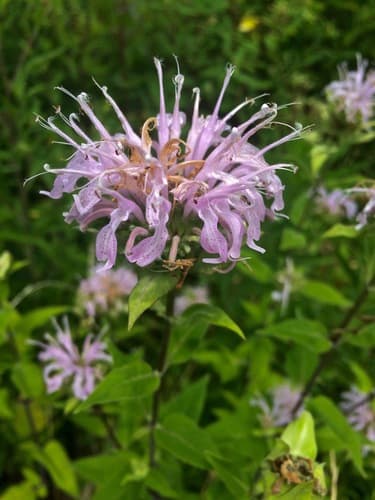
The lavender-flowered prairie cousin of bee balm, used by dozens of Indigenous nations for colds, fevers, and as a seasoning. Its scent is close to the bergamot orange that flavors Earl Grey tea, which is how it got its name.
Worth knowing
- It is more resistant to mildew than scarlet bee balm and better in sandy soil.
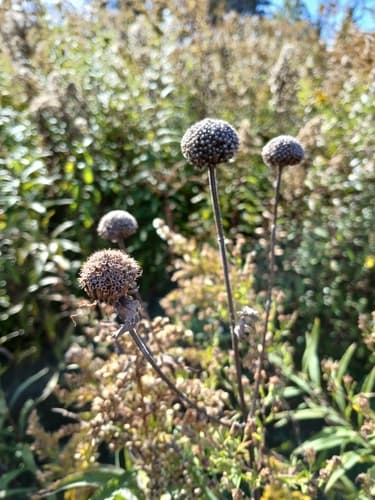
- The dried seed heads smell of oregano all winter.
- Deer and rabbits leave it alone because of the aromatic oils.
Saving its seed
Ripe: Sep, Oct. Heads dry and brown; seeds rattle out.
Collect: Same as bee balm.
Sow: Winter-sow outdoors (jugs or flats) any time after the first hard freeze. Needs about 30 days of cold-moist stratification. Surface sow; needs light.
Seed saving calendar for your zip code →
Plant it instead of
- Mugwort: The gray-green weed that takes over every disturbed lot, roadside, and garden bed on Long Island, spreading by rhizomes and suppressing neighbors chemically.