Who it feeds
The long-tubed flowers are built for swallowtails, hummingbirds, and hawk moths, which pollinate it at dusk drawn by its fragrance. Several moths, including the phlox moth, use it as a host.
What it does for the place
A midsummer nectar source for the largest pollinators, filling the July gap between bee balm and Joe Pye weed.
The story
Native to the eastern United States, garden phlox was sent to Europe in the 1700s and bred into hundreds of cultivars there before coming home as a cottage-garden classic. The name phlox is Greek for flame, for the bright color of the wild species.
Worth knowing
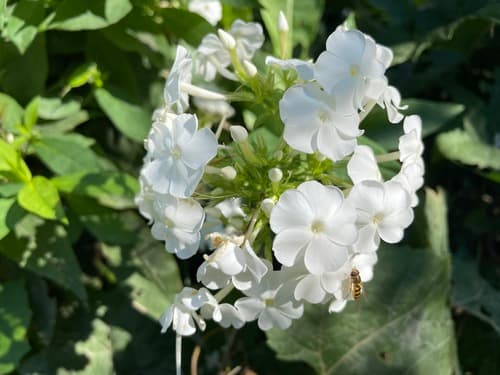
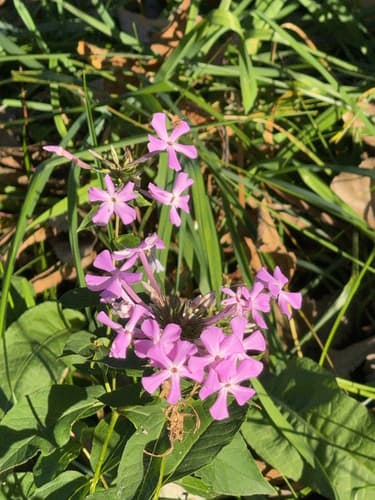
- The wild species is a soft lavender-pink; the white and red forms are selections.
- Its fragrance is strongest in the evening for moths.
- Mildew-resistant selections like 'Jeana' are among the best pollinator plants in trials.
Saving its seed
Ripe: Sep, Oct. Small round capsules turn brown and split with a pop.
Collect: Bag stems early; capsules eject seed. Seed is short-lived, so sow the same season.
Sow: Direct sow outdoors in fall; winter does the stratifying. Needs about 60 days of cold-moist stratification.
Seed saving calendar for your zip code →