Who it feeds
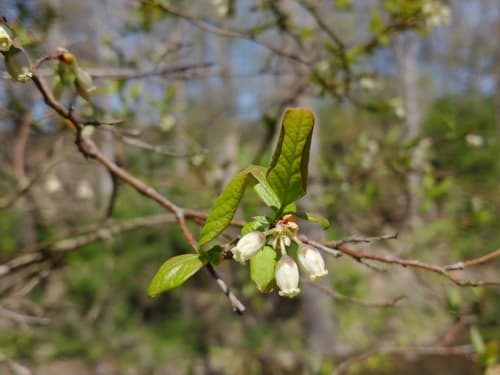
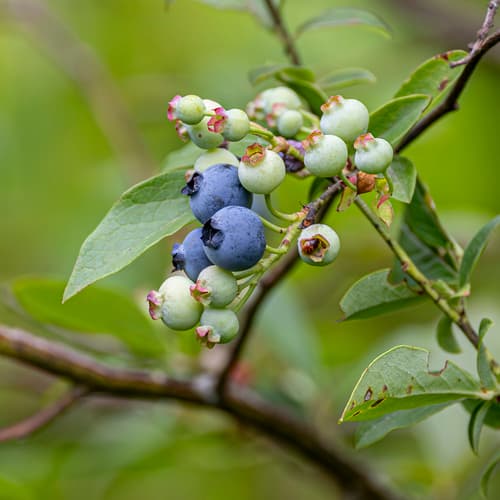
The spring bells feed bumble bee queens and the southeastern blueberry bee, a specialist that buzz-pollinates them. It hosts more than 280 caterpillar species, and dozens of birds, from thrushes to towhees, eat the fruit.
Host plant for: Over 280 caterpillar species.
What it does for the place
A four-season shrub: spring nectar, summer fruit, brilliant red fall color, and red winter twigs, all while feeding more insects than nearly any other shrub.
The story
Cultivated blueberries are less than a century old: Elizabeth White of the New Jersey Pine Barrens and USDA botanist Frederick Coville bred the first varieties from wild highbush plants in the 1910s. Before that, blueberries were a wild-harvested food for millennia. It is native to Long Island's bogs and pine barrens.
Worth knowing
- The blue bloom on a berry is a natural wax that protects it.
- Plants can live 50 years or more.
- Buzz pollination: bees vibrate their flight muscles at a specific frequency to shake the pollen loose.
Saving its seed
Ripe: Jul, Aug. Berries fully blue and soft.
Collect: Mash fruit in water; viable seed sinks. Dry on paper.
Sow: Cold-moist stratify in the fridge, then sow in spring. Needs about 90 days of cold-moist stratification. Surface sow; needs light. Seedlings are slow and variable; hardwood cuttings keep the parent's traits.
Seed saving calendar for your zip code →
Plant it instead of
- Japanese barberry: Forms thorny thickets in the forest understory, raises soil pH, and creates humid microclimates that harbor far more Lyme-carrying ticks than native shrubs do.
- Burning bush (winged euonymus): Still one of the most common landscape shrubs, and one of the most common invaders of Long Island woodlands, where its seedlings carpet the forest floor.