Who it feeds
In the Mt. Cuba Center pollinator trials, clustered mountain mint attracted more insect species and individuals than any other plant tested: bees, wasps, flies, beetles, and butterflies by the hundreds. The predatory wasps it draws control garden caterpillars.
What it does for the place
A pollinator hub that also repels deer and rabbits, tolerates drought once established, and spreads into a manageable clump.
The story
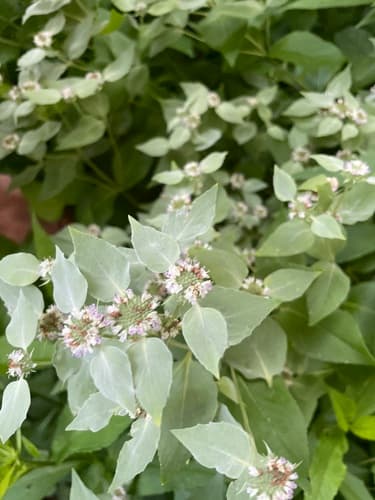
A mint-family native of eastern meadows with silvery bracts that make the whole plant look frosted in July. Indigenous peoples used it as a seasoning and a fever tea; the leaves smell strongly of spearmint.
Worth knowing
- Rub a leaf on your skin; it is a traditional mosquito repellent.
- The bracts are silver because of a waxy coating that reflects light.
- It grows in mountains and meadows alike; the name is misleading.
Saving its seed
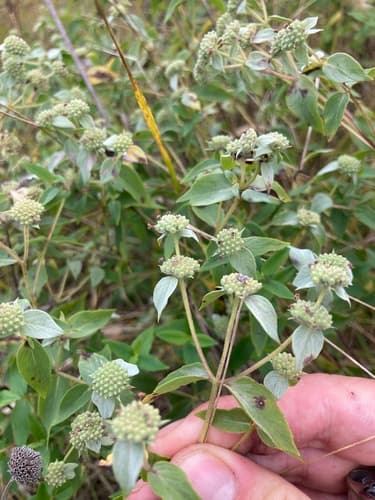
Ripe: Oct, Nov. Dry flat heads shed tiny seed when tapped.
Collect: Shake heads into a bag; sift.
Sow: Winter-sow outdoors (jugs or flats) any time after the first hard freeze. Needs about 30 days of cold-moist stratification. Surface sow; needs light.
Seed saving calendar for your zip code →
Plant it instead of
- Mugwort: The gray-green weed that takes over every disturbed lot, roadside, and garden bed on Long Island, spreading by rhizomes and suppressing neighbors chemically.