Where it came from
Europe and Asia.
How it got here
Brought by early European colonists as a medicinal and culinary herb, and repeatedly reintroduced in ship ballast and in nursery stock. It was well established in the Northeast by the 1800s.
What it does to the ecosystem
It spreads by tough rhizomes and releases chemicals that suppress neighboring plants, forming pure stands along roadsides, in vacant lots, and in any garden bed it reaches. Its wind-borne pollen is a significant late-summer allergen, and it is nearly impossible to eradicate once established.
What it costs
Probably the most common weed in Long Island landscapes and a persistent problem in nurseries, where it hitchhikes in container soil to new sites.
Don’t confuse it with
- Chrysanthemums and wormwood. Mugwort leaves are deeply lobed, green above and silvery-white and woolly beneath, with a sage-like smell. Garden mums have similar leaves but are not silvery beneath.
How to identify it
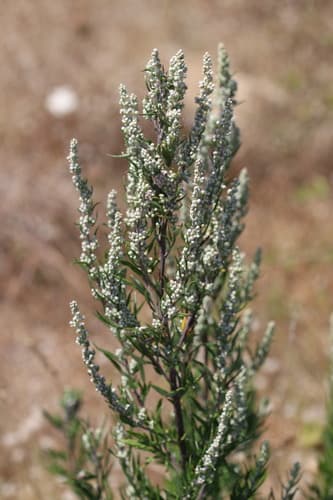
Aromatic (sage-like) plant 2 to 5 ft tall with deeply lobed leaves that are green above and silvery-white and woolly below.
What to do
Persistent digging of rhizomes, smothering with cardboard and mulch, or repeated cutting. Never rototill it; that multiplies it.
On Long Island
Everywhere: roadsides, medians, new construction, and unfortunately most garden beds. Smother with cardboard and mulch, then plant densely.
Worth knowing
- It is the moxa of traditional Chinese moxibustion and the flavoring in some traditional beers before hops.
- Rototilling a mugwort patch turns one plant into hundreds; every rhizome fragment grows.
- It is a major cause of fall hay fever in the Northeast, right alongside ragweed.