Who it feeds
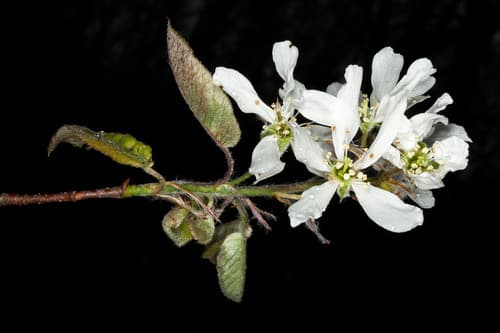
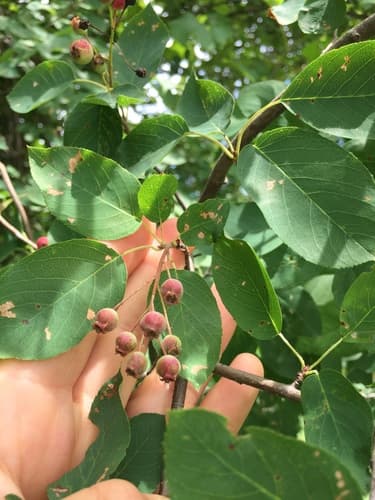
April flowers feed early bees; June fruit is stripped by robins, cedar waxwings, orioles, and thrushes within days; and it hosts red-spotted purple and viceroy caterpillars.
Host plant for: Red-spotted purple, viceroy.
What it does for the place
A small, four-season native tree that provides the first nectar, the first fruit, and orange fall color, and replaces Callery pear in every way that matters.
The story
Also called shadbush because it blooms when the shad run up eastern rivers in April, and Juneberry for its fruit. The name serviceberry may come from its bloom coinciding with the first spring funeral services when the ground thawed. Its fruit went into pemmican and pies for millennia.
Worth knowing
- The berries taste like blueberry with almond and are excellent if you can beat the birds.
- Smooth gray bark makes it handsome in winter.
- It tolerates part shade and city conditions.
Saving its seed
Ripe: Jun, Jul. Fruit dark purple and sweet (if the birds leave any).
Collect: Mash in water, collect sunken seed, do not let it dry.
Sow: Sow fresh, right after collecting; seed loses viability if it dries. Needs about 120 days of cold-moist stratification.
Seed saving calendar for your zip code →
Plant it instead of
- Callery (Bradford) pear: Cultivars planted by the millions cross-pollinate and produce fertile fruit; thorny wild offspring now fill roadsides and old fields across the Mid-Atlantic. Banned in several neighboring states.
- Autumn olive: Once planted for wildlife and erosion control; fixes nitrogen and overwhelms open habitats, and birds spread the fruit widely.